Written by: Brianne Minton
The Alabama Office of the State Climatologist (AOSC) is dedicated to providing reliable, accessible climate information that supports communities, decision-makers, and partners across the state. As climate data becomes increasingly important for planning and preparedness, we are continuing to expand and refine the services we offer to better meet the needs of Alabama.
Climate services are about turning climate data into something people can actually use. This means taking information about past,current, and potential future conditions and helping answer real questions like: How dry has it been? How unusual is this heat? What patterns are we seeing over time? Are things changing? At AOSC, our goal is to make that information clear, practical, and easy to understand.
A large part of this work focuses on understanding what has already happened and what is happening now. By maintaining long-term climate records, analyzing trends, and monitoring current conditions across the state, we can provide context for today’s weather and help explain how conditions are changing over time. This includes everything from monthly climate reports and drought monitoring to ongoing data collection and analysis.
Most of our climate services are born from collaboration. They depend on regular communication with the people who use this information every day. By working closely with partners across Alabama, we are able to focus on the questions that matter most and provide information that reflects real conditions on the ground. These relationships help ensure that the data we share is not only accurate, but also relevant and useful.
Partnerships and Public Engagement
One example of a formal, long-standing partnerships is our work with the Auburn University Water Resources Center through the Alabama Drought Reach program. This effort grew from a shared goal between the Alabama Office of the State Climatologist and Alabama Extension to improve how drought conditions are communicated and understood across the state. As one of Alabama’s land-grant institutions, Auburn provides a natural bridge between research, Extension, and agricultural communities.
Launched in May 2023, Alabama Drought Reach works directly with researchers, Extension specialists, and agricultural producers to collect real-time drought impact information. This data is shared with our office and used to support more accurate input into the weekly U.S. Drought Monitor. In turn, improved drought classification can better reflect on-the-ground conditions and help inform decisions, including those tied to agricultural support and federal relief programs.
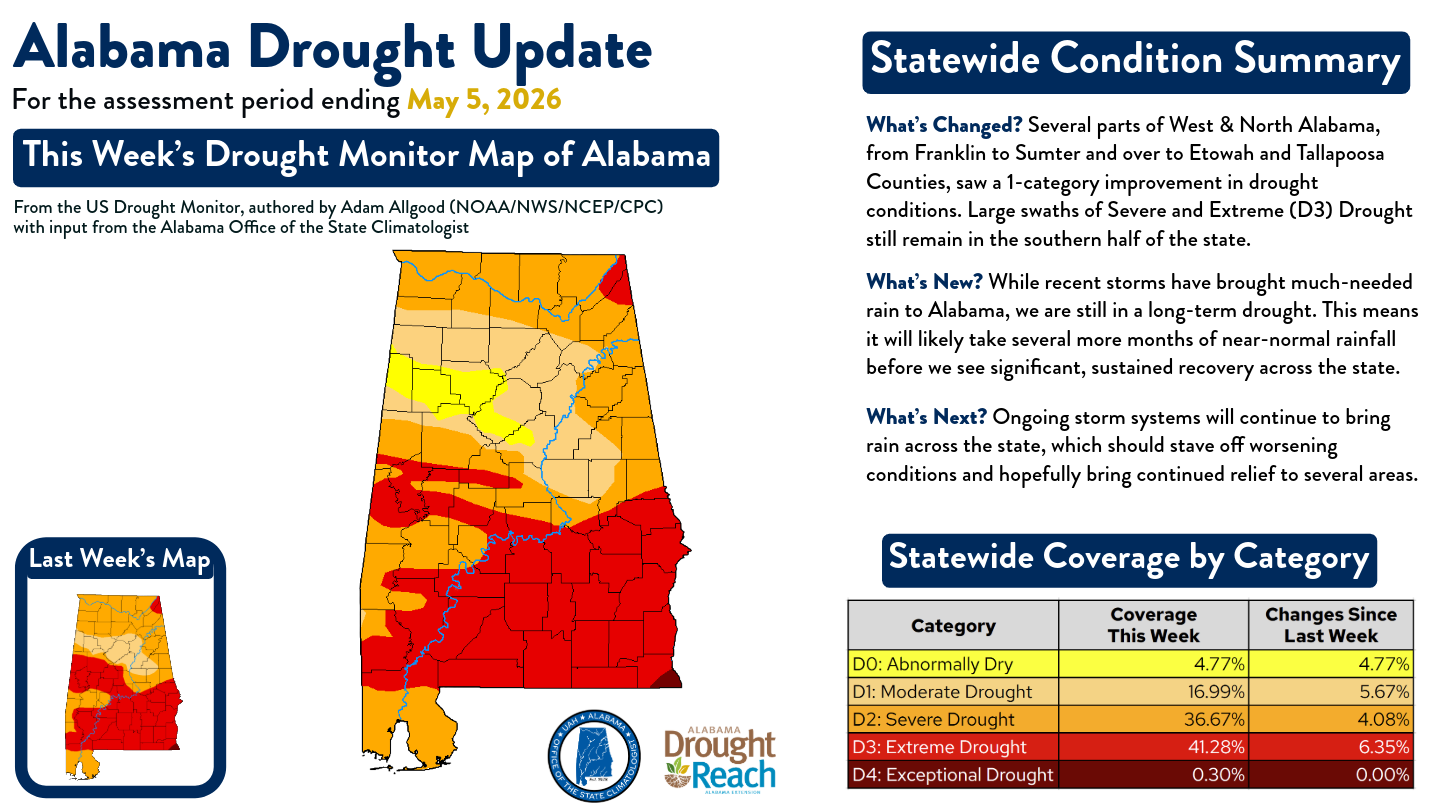
Through conversations with Alabama Extension and partners across the state, we learned there was a need for a ready-made, easy-to-share drought product that could be used in newsletters and media outreach. In response, our office worked with Alabama Drought Reach to develop a weekly drought graphic designed specifically for public communication. This product continues to be shared widely and has become a consistent way to communicate drought conditions across Alabama.
Their continued feedback also helps us better capture localized impacts, particularly in areas where drought directly affects livelihoods. Partnerships like this, along with many others across Alabama, are a key reason we are able to continue providing relevant, timely climate information. While models and datasets are essential, direct collaboration helps ensure that information reflects real conditions and real needs on the ground.
While partnerships like Alabama Drought Reach are designed to strengthen our understanding of climate conditions across the state, outreach efforts give us the opportunity to share that science more directly with the public and connect with communities in meaningful ways.
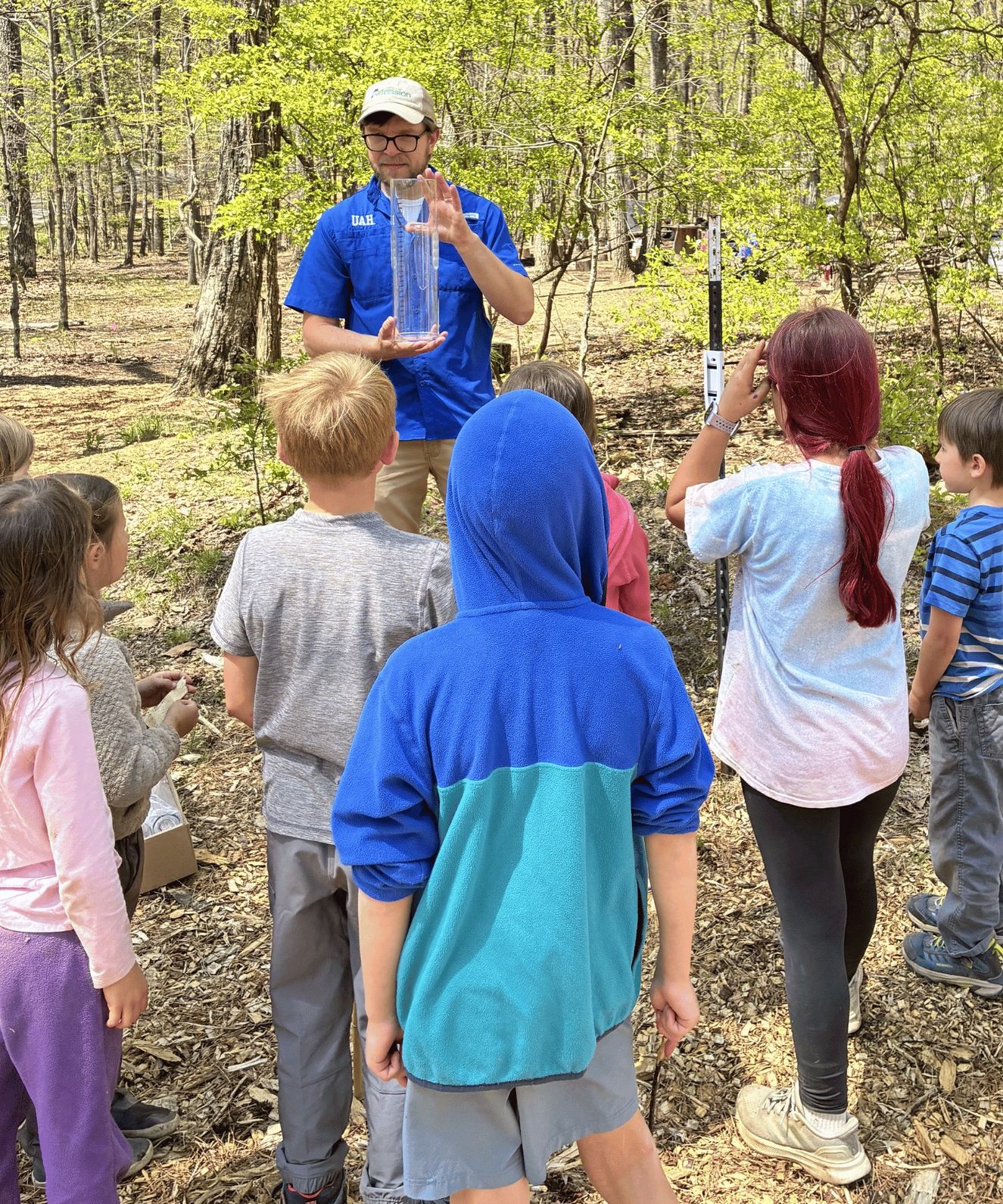
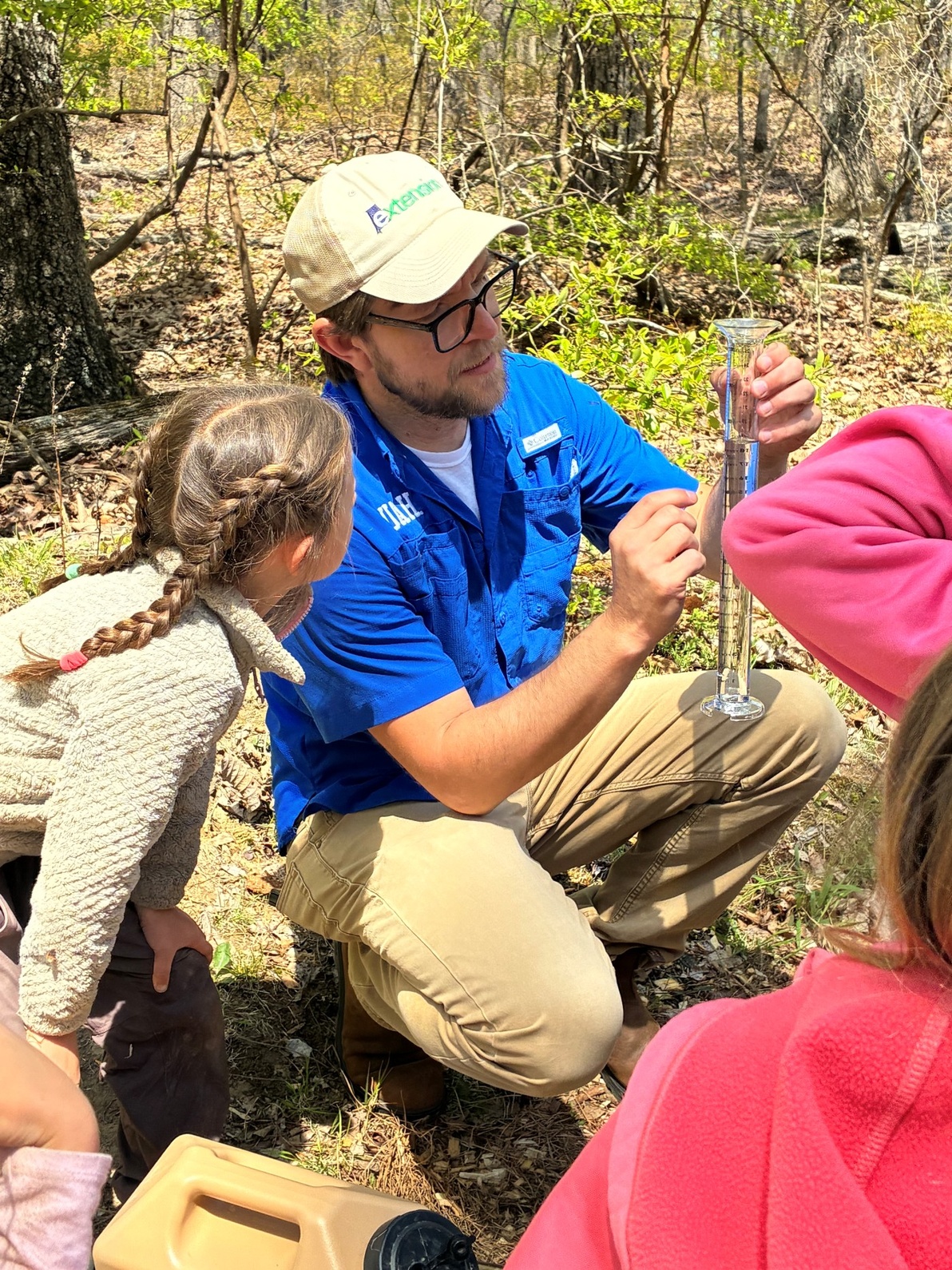
More recently, we partnered with the Little Mountain Forest School at Monte Sano State Park in Huntsville. This nature-based program centers learning around curiosity, play, and hands-on exploration, creating a unique opportunity to connect students with real-world climate science at an early age.
Working with their team, we helped install a CoCoRaHS rain gauge and spent time with students talking about where rain comes from, what happens when it does not rain, and why measuring precipitation matters. Students will now take daily 24-hour rainfall measurements and incorporate that data into their lessons, building an understanding of how weather observations connect to larger climate patterns.
Over time, students will begin to track trends, create simple charts, and explore how rainfall relates to other environmental conditions they observe. This hands-on experience not only introduces foundational data skills but also highlights the role of citizen science in contributing to a broader understanding of weather and climate across Alabama.
While much of our work focuses on research and data for decision-making, opportunities like this allow us to connect with the next generation of scientists and communicators. We are excited to continue expanding these types of outreach efforts in the future.
What We Provide
Collaborations like these directly shape the tools and resources we provide across the state. Through ongoing conversations with partners, we develop and offer a range of climate products and services designed to translate complex data into meaningful insights:
- Monthly Alabama Climate Reports summarizing temperature, precipitation, and statewide trends
- Weekly Alabama Drought Updates tracking current drought conditions and impacts
- Monthly and weekly newsletters for climate, blog, and office updates
- Social media updates to provide timely, easy-to-understand climate information
- The Alabama Drought Dashboard for interactive exploration of statewide data
- Custom Mesonet dashboards for localized, real-time observations
- Presentations, webinars, and trainings for communities, educators, and organizations
- A growing library of blogs and web content focused on Alabama’s climate
- Tailored climate data analysis to support specific questions and projects
We are also expanding opportunities for direct engagement. If you have a specific question or data need, our data request form allows you to connect with our team and receive customized climate information for your project or decision-making needs.
As we continue to grow these services, we are working to ensure our products are accessible and easy to use for a wide range of audiences. We recognize there is always room to improve, and if you encounter any barriers or have suggestions, we encourage you to reach out and share your feedback.
Stay Connected
We invite you to stay engaged with the Alabama Office of the State Climatologist:
- Visit our updated AOSC website to learn more about us
- Read our blogs, weekly drought updates, and monthly climate reports
- Join our newsletter for regular updates on Alabama’s climate
If you have questions, need help finding climate data, or are interested in speaking with our team, please contact us at aosc@uah.edu. We look forward to hearing from you and serving Alabama together.