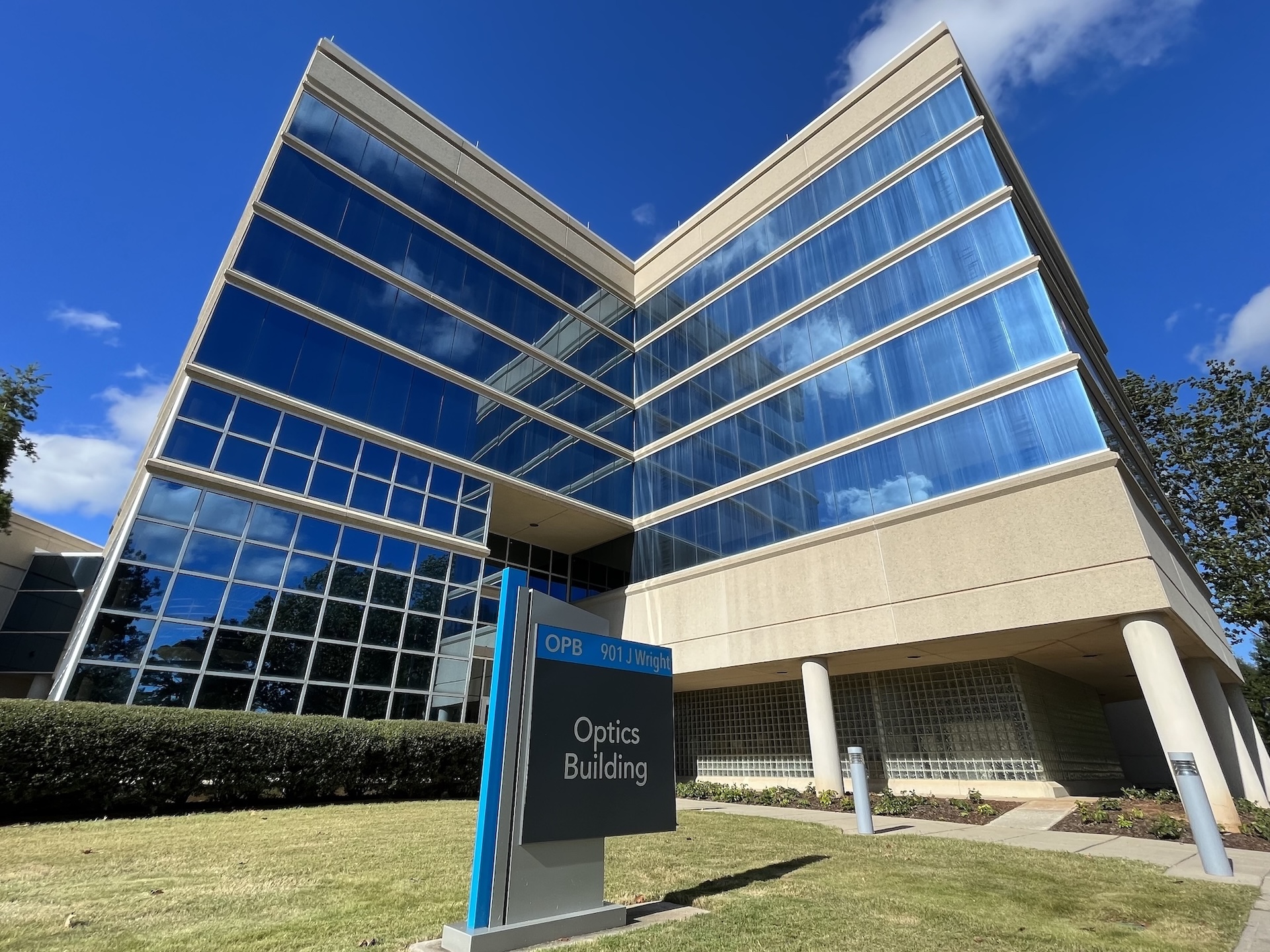
Optical Science and Engineering (OSE) is a Ph.D. program residing in the College of Science. Its curriculum is tailored for students with a science/engineering background who want to pursue a career in optics and photonics. Optics/photonics stands today as an area of major scientific and technological importance. It is not only an enabling technology for multi-discipline work, but is also widely recognized as a discipline in its own right. Optics/photonics is central in communication technology, biotechnology, nanotechnology, quantum technology, information processing, storage, and display as well as in health care and life sciences, remote sensing, national defense and industrial manufacturing.
More Information About OSE
The program spans great diversity as it moves from the fundamental physics of light and its interaction with matter to the design and development of new optical systems for a wide variety of applications such as quantum computing, cancer early diagnosis, directed energy in atmosphere, distributed fiber-optic sensing, etc.
Most of the OSE research is housed in the four-story, $10.6 million Optics Building on the UAH campus. The OSE program has access to, and utilizes the resources of the UAH Center for Applied Optics (CAO), the UAH Nano and Micro Devices Center (NMDC), the Army Space Missile Defense Command (SMDC) labs at UAH, the National Space Science and Technology Center (NSSTC) at UAH, as well as the Marshall Space Flight Center (MSFC) at the US Army Redstone Arsenal.
Because students come into this program with strong but diverse undergraduate and graduate training, the multi-disciplinary curriculum has been structured on a common basis for all entering students while compensating for individual differences and providing depth in specific areas. A total of 48 semester hours of graduate course work and a minimum of 18 semester hours of dissertation research are required for students entering the program with a Bachelor's degree. Students entering the program with a Master's degree (must be in a related field) are only required to complete 18 semester hours of graduate course work and 18 semester hours of dissertation research. Regardless of the entry status, all students must complete three study phases, punctuated by three program examinations, which include the Comprehensive Examination (written), the Qualifying Examination (written & oral), and the Dissertation Defense (oral). In addition, all requirements of Graduate School must be met to remain in good standing.
Learn More...
Applicants are strongly advised to explore our areas of research.