UAH honors Black History Month with lecture by acclaimed James Baldwin scholar Dr. Ed Pavlić
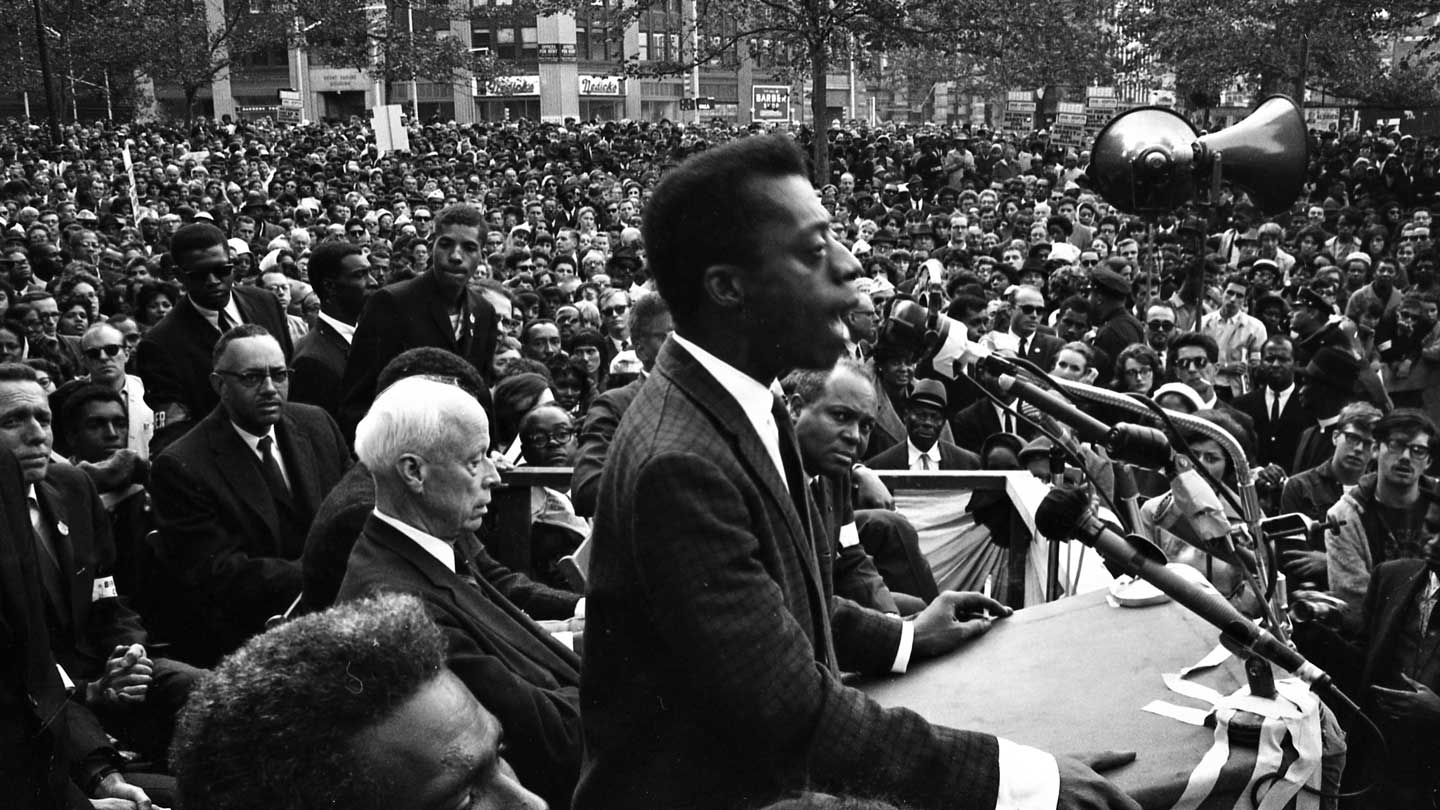
Writer James Baldwin speaks to a crowd in lower Manhattan on Sept. 22, 1963, at a “National Day of Mourning for the Children of Birmingham,” one week after the bombing of Sixteenth Street Baptist Church on Sept. 15. Acclaimed Baldwin scholar Dr. Ed Pavlić has written extensively about Baldwin, including the transformative effect the terrorist attack had on his civil rights activism. Pavlić will discuss Baldwin’s trips to the Deep South during the 1950s and 1960s on Thursday, Feb. 26, 2026, at The University of Alabama in Huntsville (UAH).
American writer James Baldwin’s civil rights trajectory changed profoundly in the wake of the bombing of Birmingham’s Sixteenth Street Baptist Church on Sept. 15, 1963. Four girls died in the terrorist attack; two teenage boys were shot and killed in the city in separate racist attacks later that day.
Dr. Ed Pavlić wrote about Baldwin’s transformation in “James Baldwin’s Day of Mourning: A tragedy in Birmingham and the making of a radical” (Boston Review, Dec. 15, 2023). Pavlić will discuss Baldwin’s works and activism in the context of his trips to the Deep South in the 1950s and 1960s at The University of Alabama in Huntsville (UAH) on Thursday, Feb. 26, at 6 p.m. in Morton Hall Room 145.
The event, “James Baldwin: A Radical Pursuit,” honors February as Black History Month on the UAH campus and is the final program in the UAH Humanities Center’s Humanities Week. The lecture is open to the public, and free tickets to reserve a spot are available on the Humanities Week 2026 page on the UAH website. UAH is a part of The University of Alabama System.
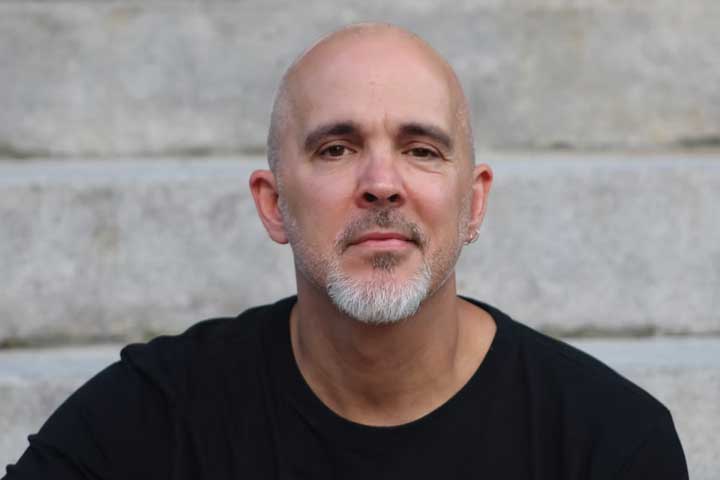
Dr. Ed Pavlić will present “James Baldwin: A Radical Pursuit” on Thursday, Feb. 26, 2026, at The University of Alabama in Huntsville (UAH).
“I think there are important things to learn from James Baldwin’s work like ‘The Fire Next Time’ or ‘If Beale Street Could Talk’ from which we gain a better understanding of race in this country, including the many nuances of what daily and generational oppression have meant to many Americans,” said Dr. Joseph Taylor, Humanities Center director and associate professor, UAH Department of English.
Pavlić, the Distinguished Research Professor of English, African American Studies, and Creative Writing at the University of Georgia, is, in Taylor’s opinion, one of the world’s foremost experts on Baldwin.
“There was a great podcast, The Baldwin 100, hosted by Cree Myles, to mark Baldwin’s 100th birth year in 2024,” Taylor said. “The podcast features different scholars, but every episode ends with Ed Pavlić, and there’s a whole episode about his own coming into Baldwin.”
Taylor is excited that a scholar of Pavlić’s stature is coming to UAH.
“He’s an encyclopedia of Baldwin. He has worked with the Baldwin estate and Baldwin’s sister Gloria Baldwin Karefa-Smart and was one of very few people to have access to unarchived Baldwin letters and other material. He’s had a great relationship with the family. So, he has a kind of knowledge that most of us don’t have because he’s seen things that a lot of us haven’t seen. He has such a grasp of Baldwin where he can move between texts and show you profound correlations.”
Taylor also noted that Pavlić consulted on Barry Jenkins’ 2018 film “If Beale Street Could Talk,” an adaptation of Baldwin’s novel.
Pavlić, Taylor added, is “a dynamic, creative writer with an impressive array of books in his own right.”
Pavlić’s work includes more than a dozen books and articles in more than 60 magazines. His website biography describes him as “an American writer whose work travels across – often blurring – genres: poetry, fiction, non-fiction, and scholarship. Centered in African American and diasporic life and culture, most of his work explores racial dynamics in the experiences of persons – fictive, actual, historical and contemporary – whose placement and perspectives aren’t neatly classifiable in contemporary vocabularies, theirs or ours.”
He is the recipient of The American Poetry Review / Honickman First Book Award (2001), The National Poetry Series Open Competition (2012, 2014), The Author of the Year Award from the Georgia Writers’ Association (2009, 2023), and the Darwin Turner Memorial Award from African American Review (1997), among others. He and his family live in Athens, Ga.
Contact
Julie Jansen
256.824.6926
julie.jansen@uah.edu
Ann Marie Martin
(256) 824-5294
annmarie.martin@uah.edu
