UAH Rotorcraft Center develops Skyspear™ attack drone with counter-uncrewed aerial systems, highlighted at T-REX event
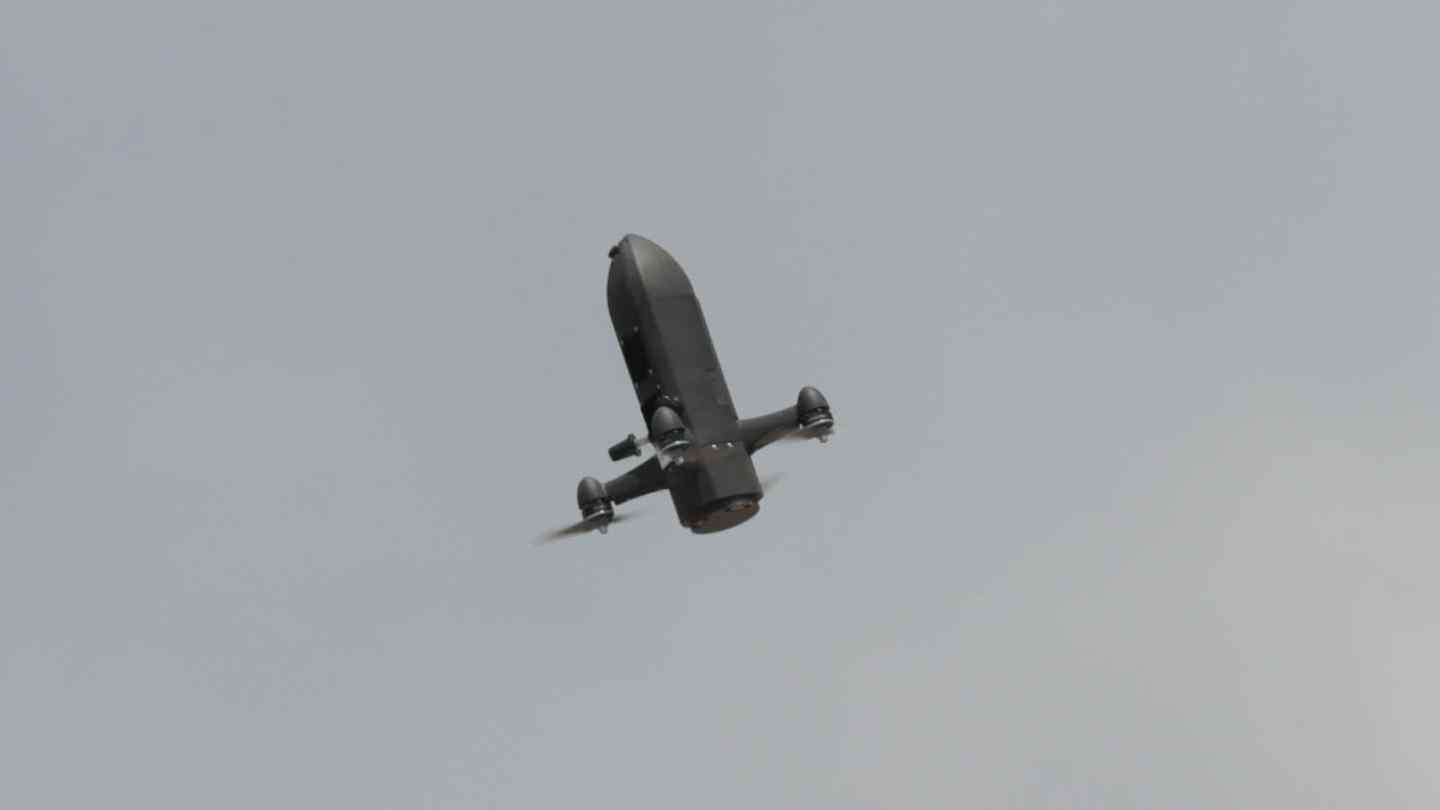
Developed by the UAH Rotorcraft Systems Engineering and Simulation Center (RSESC), the latest evolution of the Skyspear™ autonomous aerial defense platform is being showcased this month at the U.S. Department of Defense (DoD) Technology Readiness Experimentation (T-REX) 26-2 event.
Researchers at The University of Alabama in Huntsville (UAH), a part of The University of Alabama System, are showcasing the latest evolution of the Skyspear™ autonomous aerial defense platform this month at the U.S. Department of Defense (DoD) Technology Readiness Experimentation (T-REX) 26-2 event at Camp Atterbury in Indiana. Developed by UAH Rotorcraft Systems Engineering and Simulation Center (RSESC) staff and students, Skyspear™ is an attack drone designed to operate in challenging environments in support of the evolving needs of the modern warfighter by providing advanced counter-uncrewed aerial systems (C-UAS) capabilities.
Constructed using lightweight, additive-manufactured components, Skyspear™ is a high-speed first-person-view (FPV) capable interceptor platform designed for air and ground launch operations. The system exceeds 130 miles per hour and incorporates autonomous engagement algorithms, RF-silent guidance, resilient mesh communications and modular payload capabilities. The system can be rapidly reconfigured for mission-specific operations and integrates seamlessly into tactical network architectures.
“Version 1 of the system was developed initially under a research application for the U.S. Army Special Operations Forces,” explains RSESC Director Jerry Hendrix. “Once that program ended, the university invested funding to extend the program. We’re now up to Version 5, and the system has four patents pending, with the largest part of the extended initiative funded internally by UAH.”
The system will undergo operational stress testing within the tactical network environment at T-REX 26-2, where emerging defense technologies are evaluated against realistic battlefield scenarios. The event will help validate the platform’s readiness while identifying opportunities to further strengthen mission resilience and adaptability.
“It’s a low-cost, viable solution, with a greater than 90% success rate against threat sUAS Group 1 and 2 systems,” Hendrix says.
The DoD classifies drones into Groups 1–5 based on weight, altitude and speed. Group 1 and 2 systems refers to small unmanned aircraft systems (sUAS) that are considered potential hostile or unauthorized drones.
“Its ease of usability means it can be put in the field right now,” Hendrix points out. “Our soldiers are using it already, and we’re getting feedback. It was built with soldier input from an emerging U.S. Army customer need and won an award at the end of the program recognizing the effectiveness of our system.”
Skyspear™ supports the Rapid Assessment of Prototype Technology Readiness (RAPTR) Task Force, a joint DoD initiative under the Office of the Undersecretary of Defense for Research and Engineering. The research focuses on accelerating operational deployment of advanced technologies, and the T-REX program serves as a critical bridge between innovation and battlefield implementation.
“The Skyspear™ system is fully integrated and operates within the tactical network,” Hendrix notes. “It is given an instruction on what to do, it gets to a location and then uses computer vision software to attack aircraft in the air. The system has a first-person view mode that allows you to take over the aircraft when you want to fly it into a ground vehicle.”
The aircraft autonomously acquires inbound targets cued by radar or external sensors, using onboard computer vision systems to identify and engage threats. Payload options include both kinetic and non-kinetic systems, ranging from entanglement devices and smoke deployment to direct-impact strike capabilities.
“We’ve been involved in three T-REX events,” Hendrix says. “We're also involved in an event called Dirt Days, which is a series of six events that is a test where you train the soldier and allow them to actually use the system in drastically changing environmental conditions, such as the desert, high mountainous ranges and heavily wooded areas.”
The platform’s development reflects UAH’s broader commitment to applied aerospace and defense research, particularly in emerging autonomous systems and tactical technologies.
“Looking to the future, we have plans to extend both the system’s lethality as well as its mission capabilities,” Hendrix says. “For example, upcoming enhancements would include a swarming capability and a multiple simultaneous launch capacity. UAH has four patents pending, and the item is ready for commercialization and receiving keen interest.”