UAH Professor Emeritus Ramón Cerro inducted into Latin American Academy of Science
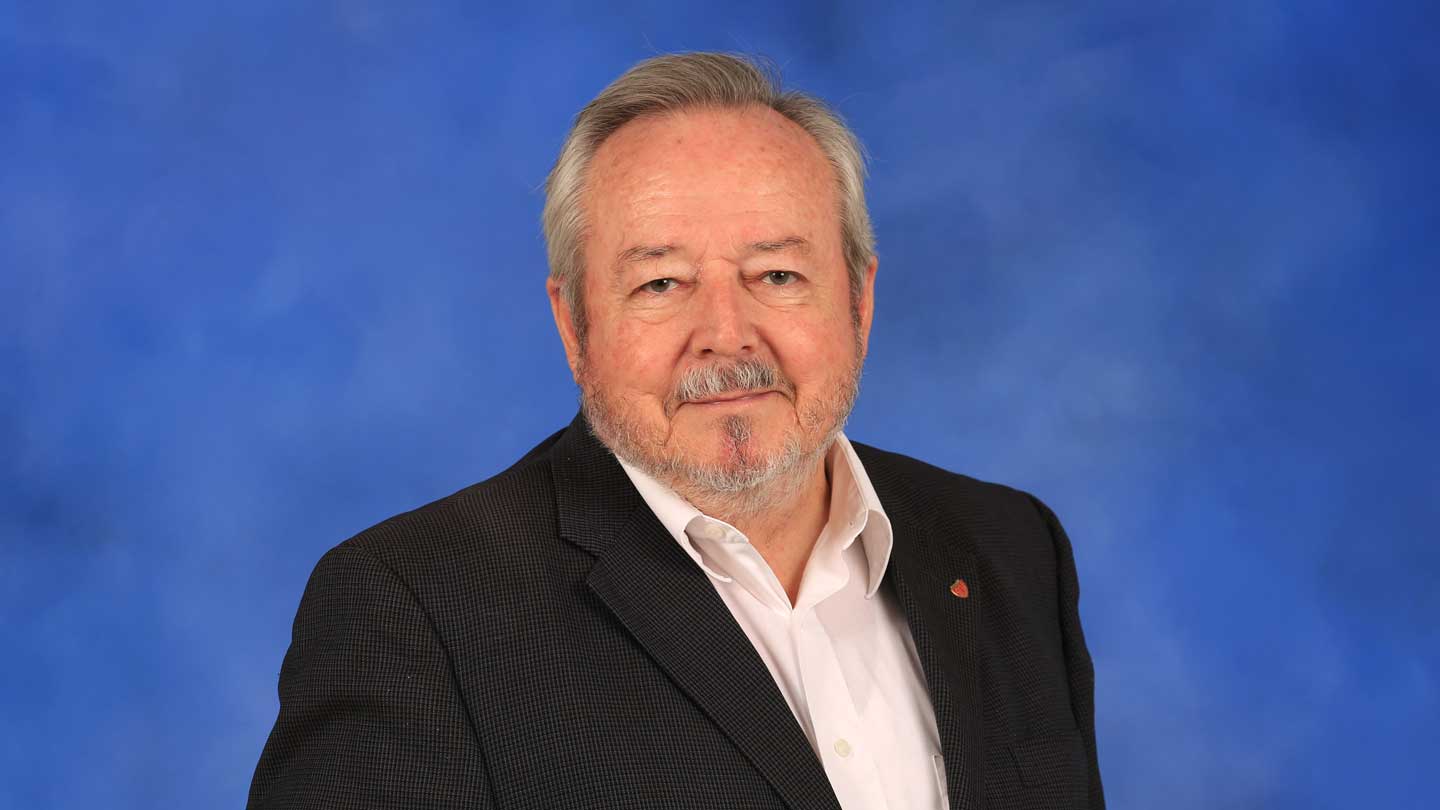
Dr. Ramón Cerro, professor emeritus, UAH Department of Chemical and Materials Engineering.
The University of Alabama in Huntsville, a part of The University of Alabama System, is celebrating a major international honor awarded to Professor Emeritus Ramón Cerro who has been inducted into the Latin American Academy of Science (ACAL), one of the most distinguished scientific academies in Latin America and the Caribbean. The group brings together leading researchers in the mathematical, physical, chemical, earth and life sciences to strengthen regional scientific integration.
“The Academia de Ciencias de America Latina is an international institution, with membership from every scientific discipline,” Dr. Cerro says. “It is indeed a great honor to be chosen and recognized by my peers after a long career of research and teaching at different universities. I am already a member of the National Academy of Engineering of Argentina, but ACAL is a truly international institution including just about every country from Canada to Argentina.”
A non-governmental organization founded in 1982 to promote scientific advancement, cooperation and policy development across the region, ACAL is headquartered in Caracas, Venezuela. Membership is highly selective and includes internationally recognized scientists whose work advances research and education across the Americas.
Cerro’s induction reflects decades of scholarly achievement, international collaboration and leadership in chemical engineering research and education. He has held a number of senior technical and leadership roles, including Technical Director of the Heavy Water Project for Argentina’s National Research Council/Atomic Energy Commission and Director of INGAR, the Instituto de Desarrollo y Diseño, a prominent research center within Argentina’s National Research Council institute for development and design. He is also a founding member of the Argentina Society for Engineering Education. As a graduate advisor in chemical engineering at UAH, he has supervised nine Ph.D. and 10 M.S. graduates and continues to mentor additional students.
“I came to UAH as Chair of the Chemical and Materials Engineering Department and spent just over 20 years here until my retirement in 2017,” the honoree says. “Before UAH, I was a professor at the University of Littoral in Argentina and at The University of Tulsa in Oklahoma. I also spent sabbaticals at the University of California at Davis, the University of Minnesota and the University of Salamanca in Spain.”
Upon retirement, Cerro was named Professor Emeritus by the Trustees of The University of Alabama System. Expanding on his research career, Dr. Cerro points to his early work in Argentina and continued contributions in fluid mechanics and transport phenomena.
“While at the University of Littoral, I was a research fellow of the National Research Council of Argentina and the Director of a research institute where the emphasis was on computer-aided design of chemical engineering processes,” the honoree notes. “At Tulsa, I went back to my Ph.D. area of research on fluid mechanics and transport phenomena with a focus on physicochemical hydrodynamics. My publications in this area span engineering as well as chemistry and physics journals.”
The researcher is a founding member of the International Society for Coating Science and Technology as well and is a recipient of the John A. Tallmadge Award, an honor that recognizes important contributions made to the understanding or advancement of coating technologies and applications.
In looking back over his long career, what Cerro finds most memorable are the special relationships he has made through the global nature of his academic collaborations. “I worked with students and faculty from many countries, and I am very proud to have friends, not only at UAH, but in different places around the world,” the researcher says. “ACAL is giving me the opportunity to be part of a large and diverse scientific community spread along the American continent.”