Dr. John Christy to retire after nearly four decades at UAH, leaving lasting legacy of research, service and leadership
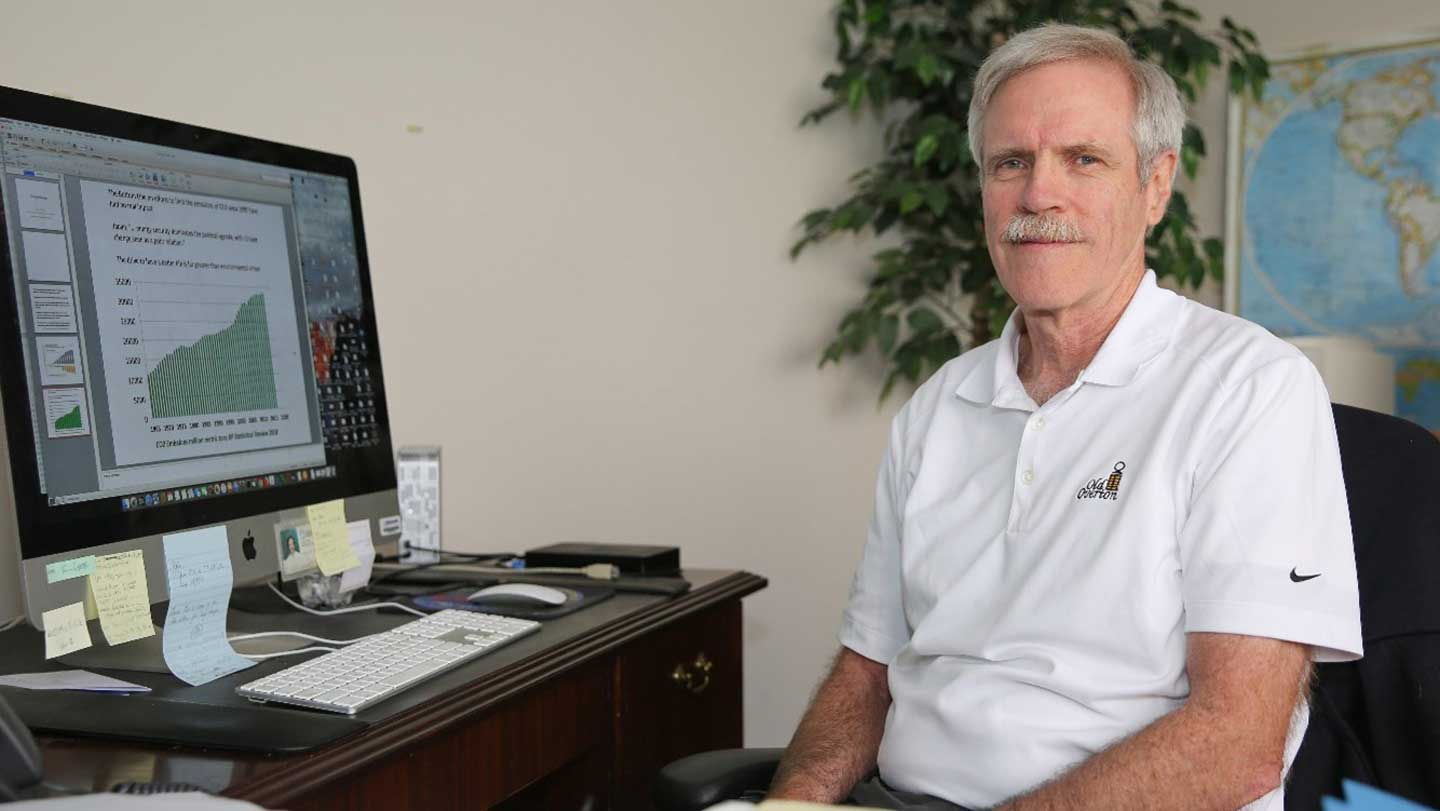
Dr. John Christy, Distinguished Professor of Atmospheric Science and director of the Earth System Science Center (ESSC) at The University of Alabama in Huntsville (UAH), is retiring after a career spanning nearly four decades at the university. Christy also served as Alabama’s State Climatologist for more than 25 years.
Dr. John Christy, Distinguished Professor of Atmospheric Science and director of the Earth System Science Center (ESSC) at The University of Alabama in Huntsville (UAH), is retiring after a career spanning nearly four decades at the university. UAH is part of The University of Alabama System.
Christy will retire from his academic career in July. He retired from his role as Alabama’s State Climatologist in Jan. 2026, a role he took on in 2000. He is widely recognized for his scientific leadership, public service and contributions to climate research at the national and international level.
Since first joining UAH in 1987, Christy has played a central role in advancing UAH’s national reputation in climate and atmospheric research. As director of the Earth System Science Center, Christy oversaw the center’s growth from approximately 20 employees in 2000 to more than 140 today, expanding its research portfolio, federal partnerships and applied science mission.
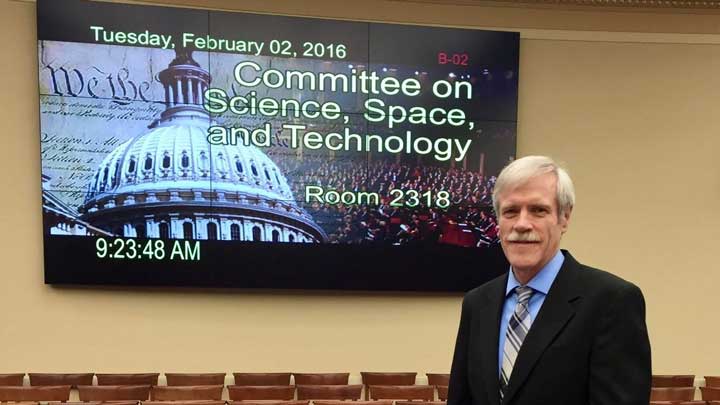
Dr. John Christy provided testimony to U.S. congressional committees on more than 20 occasions, including the Committee on Science, Space and Technology in 2016.
Internationally, Christy is recognized for his work on satellite-based climate observations. In 1989, he and Dr. Roy W. Spencer developed a global temperature data set derived from microwave satellite observations beginning in 1979. This work fundamentally advanced the ability to monitor Earth’s climate and earned the Spencer-Christy team NASA’s Medal for Exceptional Scientific Achievement in 1991, followed by a Special Award from the American Meteorological Society in 1996. Christy was inducted as a Fellow of the American Meteorological Society in 2002.
“Over almost four decades, Dr. Christy’s leadership as a faculty member and research center director helped strengthen UAH’s standing as a hub for atmospheric and Earth system science,” said Dr. Robert Lindquist, UAH vice president for research and economic development. “At the same time, the Alabama Office of the State Climatologist has become a renowned source of climate data and interpretation for agencies, policymakers, researchers and the public.”
Christy’s career reflects sustained engagement with science policy and public service. He has served as a contributor and lead author for multiple assessment reports by the Intergovernmental Panel on Climate Change, served on five National Research Council panels or committees, and provided testimony to U.S. congressional committees on more than 20 occasions. His research has been supported by NASA, NOAA, the U.S. Department of Energy, the U.S. Department of Transportation and the State of Alabama, with publications appearing in leading scientific journals including Science, Nature, Journal of Climate and Journal of Geophysical Research.
Christy also served as Alabama’s State Climatologist for more than 25 years, a role that extended his work at UAH directly into public service across the state. During his tenure, the Alabama Office of the State Climatologist evolved into a critical resource for agriculture, water resources, emergency management, forestry and infrastructure planning, translating climate data into practical tools such as climate summaries, drought assessments and monitoring tools that help translate data into practical context.
The office’s effectiveness has been strengthened by its close integration with UAH’s research infrastructure and academic expertise. “This collaboration allows us to provide timely, usable climate information and facilitates close coordination with federal partners such as NASA and the National Weather Service, which are also hosted here at UAH,” said Lindquist.
Today, the organization serves as Alabama’s lead contributor to the U.S. Drought Monitor and provides direct input to state drought planning through ongoing coordination with water resource managers and emergency response partners. Among its widely used tools is the Lawn and Garden Moisture Index. Developed by Christy himself, the tool is now used extensively across the Southeast. It has been maintained by Dr. Lee Ellenberg, who was recently appointed by Governor Kay Ivey to succeed Christy as the new Alabama State Climatologist. Ellenburg has served as Associate State Climatologist since 2021 and has been closely involved in the office’s operations, research activities and outreach efforts.
“It was an honor for me to succeed Dr. Richard McNider as State Climatologist, and with his continued help we saw many areas during my 25 years in that role where we advocated for enhanced economic development based on Alabama’s abundant natural climate resources,” Christy notes. “Dr. Ellenburg has already taken the lead on these activities, and with his appointment, the Governor has assured continued progress for the State.”
Beyond his professional work, Christy has long maintained strong commitments to community, faith and family. He has been actively involved in church service throughout his life and has pursued endurance athletics, including completing the Mountain Mist ultra-marathon 10 times. Christy and his wife, Sherry, are also proud grandparents to seven grandchildren, a role he often describes as his most meaningful.
Christy’s lifelong connection to climate science began well before his academic career. He built his first climate data set as a teenager in 1966, a passion that ultimately shaped his professional path. His background also includes earning bachelor’s degrees in mathematics and physics; teaching as a missionary educator in Kenya, where he met his wife Babs, who passed away in 2014; serving as a bivocational pastor while teaching college mathematics, and completing a Master of Divinity before earning his master’s and doctoral degrees in atmospheric sciences from the University of Illinois.
Contact
Julie Jansen
256.824.6926
julie.jansen@uah.edu