UAH’s second annual MLK Leadership Breakfast focuses on ways to improve health care for all
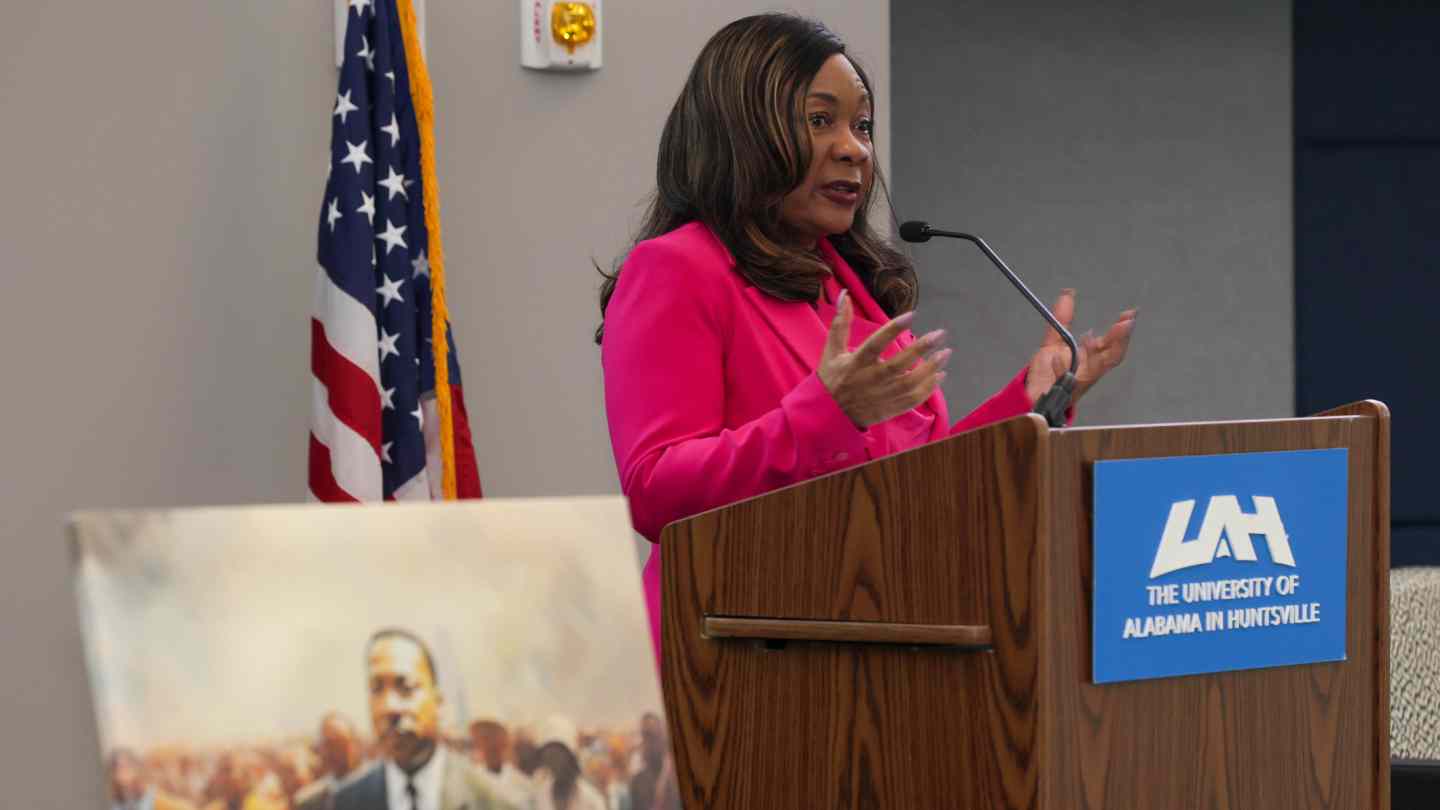
Catherine Coleman Flowers, founder of the Center for Rural Enterprise and Environmental Justice, talks about efforts to address health disparities in Lowndes County during the second annual Dr. Martin Luther King Jr. Leadership Breakfast at The University of Alabama in Huntsville (UAH) on Jan. 14, 2026.
Before NASA ever establishes a colony on the moon, they’ll need an effective, reliable way to handle sanitation. Rural Lowndes County, one of Alabama’s poorest areas, needs a good sewage solution now.
The common nature of the problem gives hope to Catherine Coleman Flowers, founder of the Center for Rural Enterprise and Environmental Justice (CREEJ) and an internationally recognized advocate for the human right to clean water and sanitation. She led efforts to identify health issues in Lowndes County, ultimately linked to failed sewage systems. Her team brought international attention to health and economic disparities in Lowndes and other marginalized communities.
“NASA knows how to take urine and turn it into drinking water,” she said, “but they don’t know what to do with the solids. We’re hoping to partner with NASA to come up with innovative ways to treat wastewater. The solutions they find could potentially help places like Lowndes County.”
Flowers talked about her career of service as keynote speaker for the second annual Dr. Martin Luther King Jr. Leadership Breakfast, presented by The University of Alabama in Huntsville (UAH) on Jan. 14 in the Student Services Building. UAH is a part of The University of Alabama System.
The theme of the breakfast – Shaping the Healthcare Community of the Future – encompassed Flowers’ work as well as the mission of the UAH College of Nursing and its new Neighborhood Nursing initiative. The program also featured a discussion with Flowers and Dr. Leon Lewis, Huntsville Hospital Health System; Tamika Alexander, WHNT-19 anchor, moderated the panel.
Leading through service
Kristina Hendrix, UAH vice president for strategic communications, welcomed guests and shared two of King’s quotes that particularly fit the occasion:
- “A genuine leader is not a searcher for consensus but a molder of consensus.” – Assembly for Peace, November 1967
- “Everybody can be great because everybody can serve.” – Sermon at Ebenezer Baptist Church, February 1968
“This morning you will hear from leaders who have made it their mission to serve and to mold the communities they lead, just as Dr. King did,” Hendrix said as she introduced Dr. Karen Frith, dean of the College of Nursing.
“I’m continually inspired by Dr. King’s conviction that meaningful change becomes possible when individuals and institutions unite to build a brighter future for everyone,” Frith said.
Neighborhood Nursing, the college’s latest strategy to promote health and well-being across Alabama, will begin its initial pilot program in a couple of weeks.
“Students, faculty, alumni, volunteers and community partners will go into neighborhoods to provide free preventive health screening and education with the support of health care providers. We will help connect neighbors to critical resources, primary care and specialty care.”
The initiative is also a living classroom for UAH students.
“It’s a powerful learning experience for our students because it brings the social determinants of health into clear focus. Health is not shaped by physical condition alone. It is influenced by the environments in which people live, work, play and pray.”
Opportunities to do great things
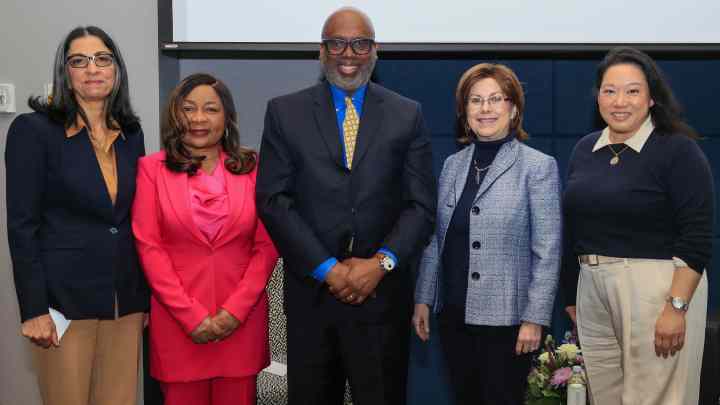
Gathering at the second annual Dr. Martin Luther King Jr. Leadership Breakfast at The University of Alabama in Huntsville (UAH) on Jan. 14, 2026, are, from left, Dr. Azita Amiri, associate dean of research, UAH College of Nursing; Catherine Coleman Flowers, who gave the keynote address; Dr. Leon Lewis, Huntsville Hospital Health System; Dr. Karen Frith, dean, College of Nursing, and Dr. Helen Lien, senior development officer, College of Nursing.
Flowers is the author of “Waste: One Woman’s Fight Against America’s Dirty Secret” and the new book “Holy Ground: On Activism, Environmental Justice, and Finding Hope.” She has been recognized as one of Time’s 100 Most Influential People in the World, and her work has been profiled by The New York Times, The Guardian, PBS and others. She was awarded a 2020 MacArthur Fellowship grant for her work as an environmental health advocate.
“I’m just a country girl from Lowndes County, Alabama,” Flowers said. “Whatever I do, I’ll always remember where I’m from, and I always want to give back to the community. Part of that inspiration comes from Dr. Martin Luther King Jr. There is an opportunity for each and every one of us to serve and do great things.”
She cited an example of servant leadership, a nurse they hired, who helped her team when they were collecting blood and fecal samples to prove that Lowndes residents were suffering from hookworm and other tropical parasitic diseases caused by raw sewage.
“Because of her calm spirit and because she was compassionate, she connected to the community. People were lining up with their children to give us blood samples. She knew she had to talk to the people, and she could explain it to them in ways they could understand.”
When the study was published in 2017 and subsequently reported in The Guardian, it made a big difference.
“It never would have happened without community engagement,” Flowers said. “It never would have happened without the collaboration of educational institutions. It never would have happened without the medical profession. As a result, it changed the trajectory. When we just talked about sanitation as an infrastructure issue by itself, nobody cared. But when we connected with the health care disparities, then people start paying attention. Now we’re not only just talking about people in Lowndes County, we’re hearing about this globally.”
Doctors and nurses needed
The panel discussion addressed other looming health care needs.
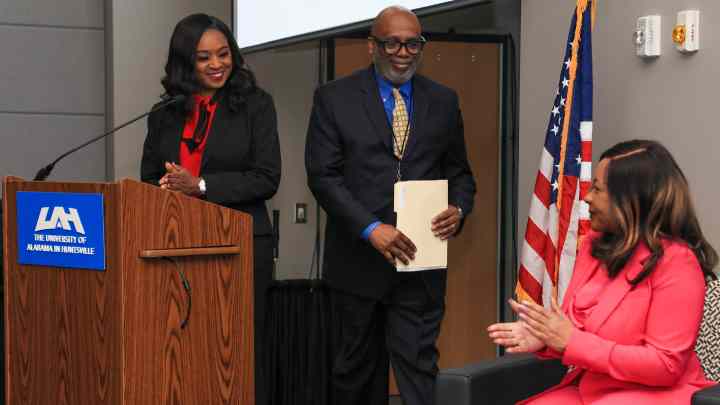
Tamika Alexander, left, and Catherine Coleman Flowers, right, welcome Dr. Leon Lewis, Huntsville Hospital Health System, to the stage for a panel discussion at the second annual Dr. Martin Luther King Jr. Leadership Breakfast at The University of Alabama in Huntsville (UAH) on Jan. 14, 2026. Alexander, WHNT-19 anchor, moderated the panel, and Flowers served as keynote speaker for the event.
Alexander asked Lewis, an OB/GYN who has served the Huntsville area for 24 years, about issues that most concern him.
“A shortage of doctors and health care providers,” he said. “We are growing in Alabama, especially here in Huntsville. But at the same time, we are losing doctors. We have had a lot of small hospitals closing, and those patients are coming from outlying areas to Huntsville.”
Alexander asked Flowers, “How has growing up in rural Alabama shaped your perspective on poverty and public health?” Flowers’ answer indicated a possible solution for Lewis’ concern.
“Just because a person grows up being poor doesn't mean that they have to end up being poor,” Flowers said. “They must have the opportunity to have access to education. When we start limiting education for young people, then we’re going to have more poverty.”
And possibly a health care system not prepared to face the problems poverty brings.
Flowers and Lewis agreed that all residents need to get involved in their community’s affairs, especially in regard to health issues.
Numerous sponsors helped to make the event a success. Hendrix recognized and thanked them:
- Gold Sponsors – Nola VanPeursem Architects, Redstone Federal Credit Union and the UAH Office of the Provost and Executive Vice President for Academic Affairs.
- Silver Sponsors – Alabama Credit Union, Brasfield and Gorrie, Huntsville Hospital Health System, Leidos, Madison County Commission, Starfish Holding Companies (Torch Technologies, Freedom Real Estate and Capital, and SIMVANA) and the UAH Dining Services and Sodexo.
- Bronze Sponsors – Aviation and Missile Solutions, Bank Independent, Huntsville/Madison County Convention and Visitors Bureau, Yedla Management Company and the UAH College of Nursing.
Contact
Julie Jansen
256.824.6926
julie.jansen@uah.edu
Ann Marie Martin
(256) 824-5294
annmarie.martin@uah.edu