UAH researcher identifies breakthrough pathway for air pollution particle formation
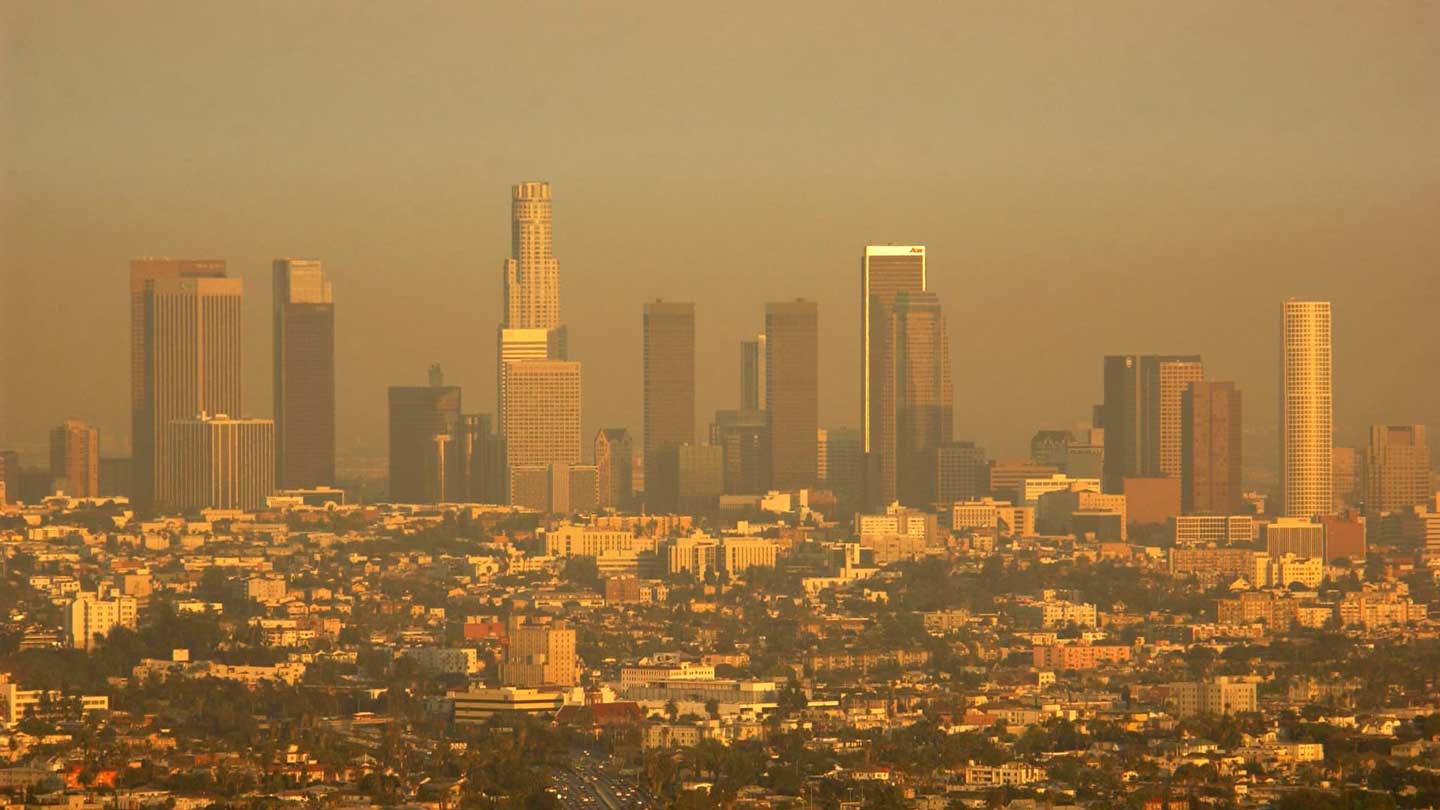
Pollutants are formed from both natural and human (anthropogenic) sources.
An atmospheric scientist at The University of Alabama in Huntsville (UAH), a part of The University of Alabama System, has helped uncover a previously unknown chemical pathway that plays a major role in the formation of air pollution particles in environments influenced by both natural and human-made emissions – an advance that could reshape how scientists understand air quality and climate impacts.
Dr. Shanhu Lee, a professor of Atmospheric and Earth Science at UAH, led a study published in Geophysical Research Letters showing that oxygenated organosulfates (OOS) – a class of sulfur-containing organic compounds – can form directly in the gas phase in aerosol emissions and act as powerful “seeds” for new particle formation in the atmosphere. These particles can grow into fine particulate matter that affects cloud formation and adversely impacts air quality, human health and climate well-being.
“This research represents a breakthrough in aerosol science,” Lee says. “Future studies will focus on how these processes affect air quality in cities and how emerging sources of emissions may further influence particle formation.”

Dr. Shanhu Lee, a professor of Atmospheric and Earth Science at UAH.
The new discovery emerged unexpectedly from laboratory experiments designed to mimic forested environments in the United States, which are frequently influenced by long-range transport of anthropogenic pollution, the kind of contamination of air, water or soil caused by human activities.
“We did not initially set out to study oxygenated organosulfates,” Lee explains. “Our original goal was to investigate aerosol formation processes in environments that mimic U.S. forests, which are continually influenced by transported anthropogenic pollution. During our experiments, we unexpectedly observed that mixing biogenic compounds with ozone and sulfur dioxide produced oxygenated organosulfates in the gas phase, which was surprising, because organosulfates were thought to form mostly in particles.”
The gas phase in aerosol species, including low-volatility compounds, exists in the atmosphere before or during their conversion into solid or liquid aerosol particles, influencing particle formation, growth and chemical reactions.
To determine whether this gas-phase formation was chemically feasible, Lee collaborated with Dr. Jonas Elm and his team at Aarhus University in Denmark. Using advanced quantum chemical calculations, the researchers identified a previously unknown, barrier-less reaction pathway that allows OOS to form directly from common atmospheric compounds.
“This was a surprising discovery,” Lee said. “The calculations showed that these reactions can occur efficiently in the gas phase, forming stable oxygenated organosulfates that had not been considered before.”
Using state-of-the-art mass spectrometers – funded by a National Science Foundation Major Research Instrumentation grant and supported by UAH’s Office of the Vice President for Research and Economic Development, as well as the UAH Earth System Science Center – Lee and her team detected more than 200 distinct gas-phase oxygenated organosulfates. The collaborators found that these compounds contribute significantly to aerosol nucleation, a critical first step in new particle formation.
Aerosol nucleation is the process where new, tiny solid or liquid particles (aerosols) form directly from gas molecules, creating the initial seeds for haze, clouds and pollution, primarily involving gases like sulfuric acid, ammonia and low-volatility organics and organic vapors colliding to form stable clusters that grow into nanoparticles, impacting air quality and health.
“This discovery arose from experiments designed to mimic real atmospheric mixtures,” Lee explains. “By combining natural emissions with common anthropogenic pollutants and applying advanced measurements and theoretical calculations, we found that oxygenated organosulfates not only form in the gas phase, but are also highly effective in driving particle formation.”
The findings challenge the long-standing assumption that aerosol formation results from independent contributions of individual chemical precursors, such as sulfuric acid or organic molecules.
“Traditionally, aerosol formation has been treated as separate contributions from different precursors,” Lee said. “Our study shows that these precursors can chemically react with one another to form entirely new compounds. We identified oxygenated organosulfates as a new and previously unrecognized class of aerosol nucleation precursors that are not included in most current models.”
Understanding these interactions is especially important, because most real-world environments contain a mixture of biogenic and anthropogenic emissions.
“Purely biogenic or purely anthropogenic environments are actually quite rare in the real atmosphere,” Lee notes. “Urban areas still contain substantial natural emissions from vegetation, and forested regions are often influenced by pollution transported over long distances. To realistically understand air pollution and its impacts, we must study these complex mixed systems.
“Many cities, like Atlanta and Houston, experience high sulfur dioxide pollution from nearby power plants, while also having strong biogenic emissions from vegetation,” the researcher concludes. “In addition, emerging urban pollutants – such as personal care and cleaning products – emit monoterpenes like limonene. Future work will examine how limonene, ozone and sulfur dioxide interact to form oxygenated organosulfates in urban environments. This research will be critical for improving our understanding of air quality in cities as emissions from these emerging sources continue to increase.”
