UAH hosts inaugural Army Best Drone Warfighter competition
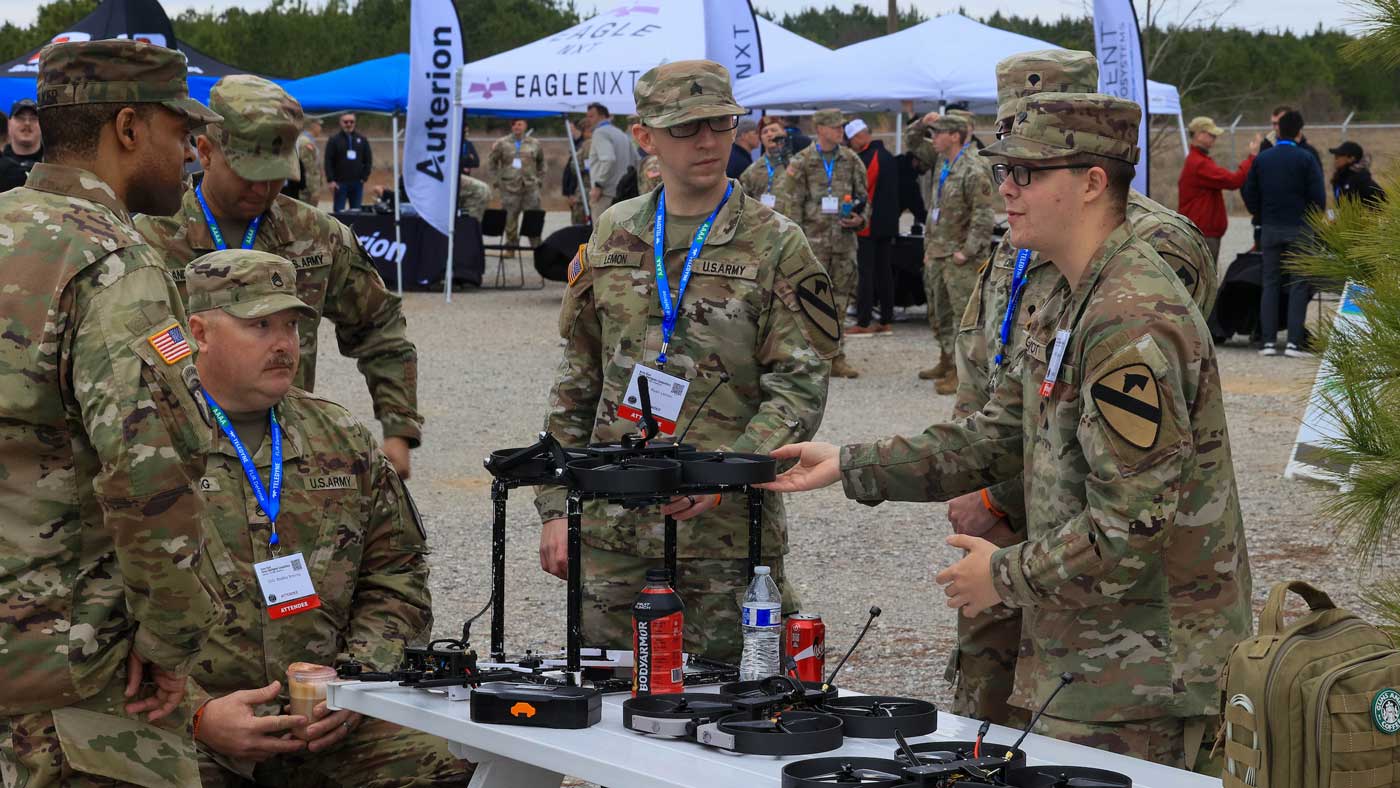
UAH hosted the inaugural Army Best Drone Warfighter Competition on Feb. 17–19 at its Unmanned Aircraft System (UAS) and Counter-UAS Test Range.
The University of Alabama in Huntsville (UAH), a part of The University of Alabama System, hosted the inaugural Army Best Drone Warfighter Competition on Feb. 17–19 at its Unmanned Aircraft System (UAS) and Counter-UAS Test Range, highlighting the university’s expertise in advanced uncrewed systems research, testing and training. The competition reinforces the UAH’s role as a national leader in uncrewed systems integration and innovation.
Sponsored by the Army Aviation Association of America (AAAA) in coordination with the U.S. Army Aviation and Maneuver Centers of Excellence, the three-day competition brought more than 200 elite drone operators from active duty, Reserve and National Guard units to Huntsville to compete in a series of demanding technical and tactical challenges. More than 800 attendees observed the event.
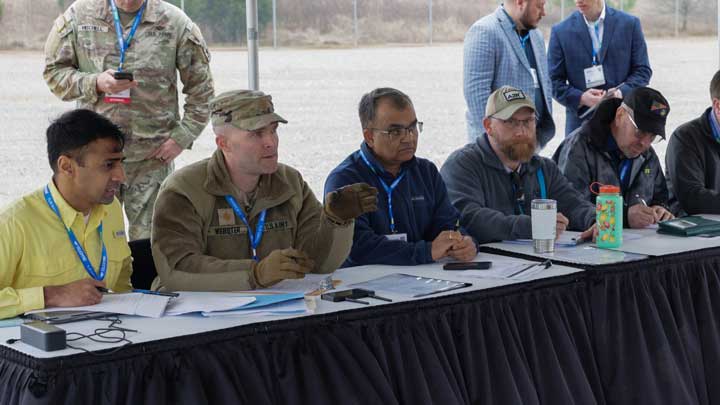
“This competition highlights not only the Army’s focus on drone dominance, but also the unique capabilities we have built here in Huntsville,” says Taylor Abington, deputy director of UAH’s Rotorcraft Systems Engineering and Simulation Center (RSESC). “Our test range provides the secure airspace, technical infrastructure and operational flexibility required to execute complex events like this, while also supporting year-round research and development for our partners.”
The competition featured three simultaneous lanes designed to test speed, precision, teamwork and innovation:
- Best Operator Lane – A head-to-head first-person-view (FPV) drone race using identical National Defense Authorization Act (NDAA)-compliant systems, testing precision maneuvering over a timed obstacle course.
- Best Tactical Hunter-Killer Team Lane – Two-soldier teams conducted mission planning, completed a physically demanding ruck march and executed reconnaissance and simulated strike missions using backpack-portable drones.
- Best Innovation Lane – Teams presented soldier-designed drone technologies in a “Shark Tank”-style pitch before demonstrating their capabilities in flight.
At the conclusion of the competition, the U.S. Army announced the following winners:
- Best Drone Operator: Sgt. Javon Purcher, 1st Cavalry Division, Fort Hood, Texas
- Best Tactical Squad: Staff Sgt. Angel Caliz and Spc. Jonah Burks, 2nd Cavalry Regiment, Vilseck, Germany
- Best Innovation: 1st Lt. Ryan Giallonardo, Chief Warrant Officer 3 Robert Reed, Chief Warrant Officer 2 Nathan Shea and Sgt. 1st Class Brent Wehr, 28th Infantry Division, Pennsylvania Army National Guard
Beyond recognizing top performers, the event serves as a talent-management and doctrine-development opportunity, identifying the training, resources and aptitude required to develop the Army’s most effective small UAS operators. Future iterations of the event are expected to expand in complexity, incorporating electronic warfare environments, kinetic target engagements and allied participation.
UAH test range capabilities on display
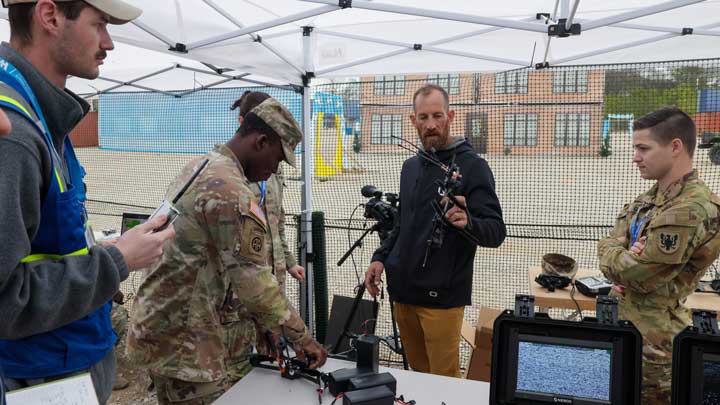
The competition showcased the robust capabilities of the Huntsville UAS and C-UAS Test Range, which is managed by UAH and situated adjacent to Huntsville International Airport. In 2021, the FAA selected Huntsville as one of five host airports to evaluate technologies and systems that could detect and mitigate potential safety risks posed by unmanned aircraft. The effort is part of the agency’s Airport Unmanned Aircraft Systems Detection and Mitigation Research Program.
The 2,500-acre restricted airspace facility supports research, development, test and evaluation (RDT&E) of uncrewed aerial systems and counter-UAS technologies. As an FAA-designated site for UAS detection and mitigation research, the range provides a controlled yet operationally realistic environment for military training, first responder exercises, industry demonstrations and academic research.
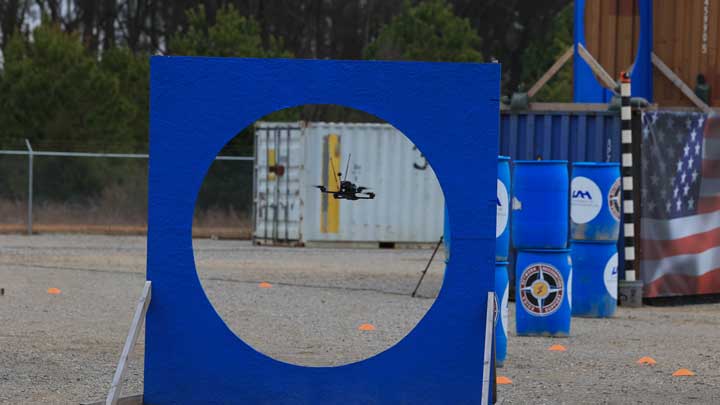
The range supports:
- Advanced drone and counter-drone testing, including detection, tracking, identification and mitigation (DTIM) systems
- Autonomous and collaborative swarm operations
- Military and law enforcement training
- NDAA-compliant system evaluation
- Workforce development and academic research integration
UAH’s management of the range enables close coordination with federal, state and industry partners, creating a neutral, secure environment capable of hosting high-level national defense events.
“The Huntsville UAS and C-UAS Test Range represents the power of partnership between academia, government and industry,” says Jerry Hendrix, RSESC director.
“UAH is uniquely positioned to support the Army and other federal agencies with advanced research, secure testing environments and a highly skilled workforce pipeline.”
Located near Redstone Arsenal and key Army commands, the UAH-managed test range provides a strategically important venue for evaluating next-generation capabilities in realistic operating environments. Organizers anticipate the Best Drone Warfighter Competition will become an annual Army-wide event, with Huntsville’s UAH-managed range serving as a model venue for future expansion.