UAH to host SQC colloquium uniting academia, industry and government to advance quantum technologies
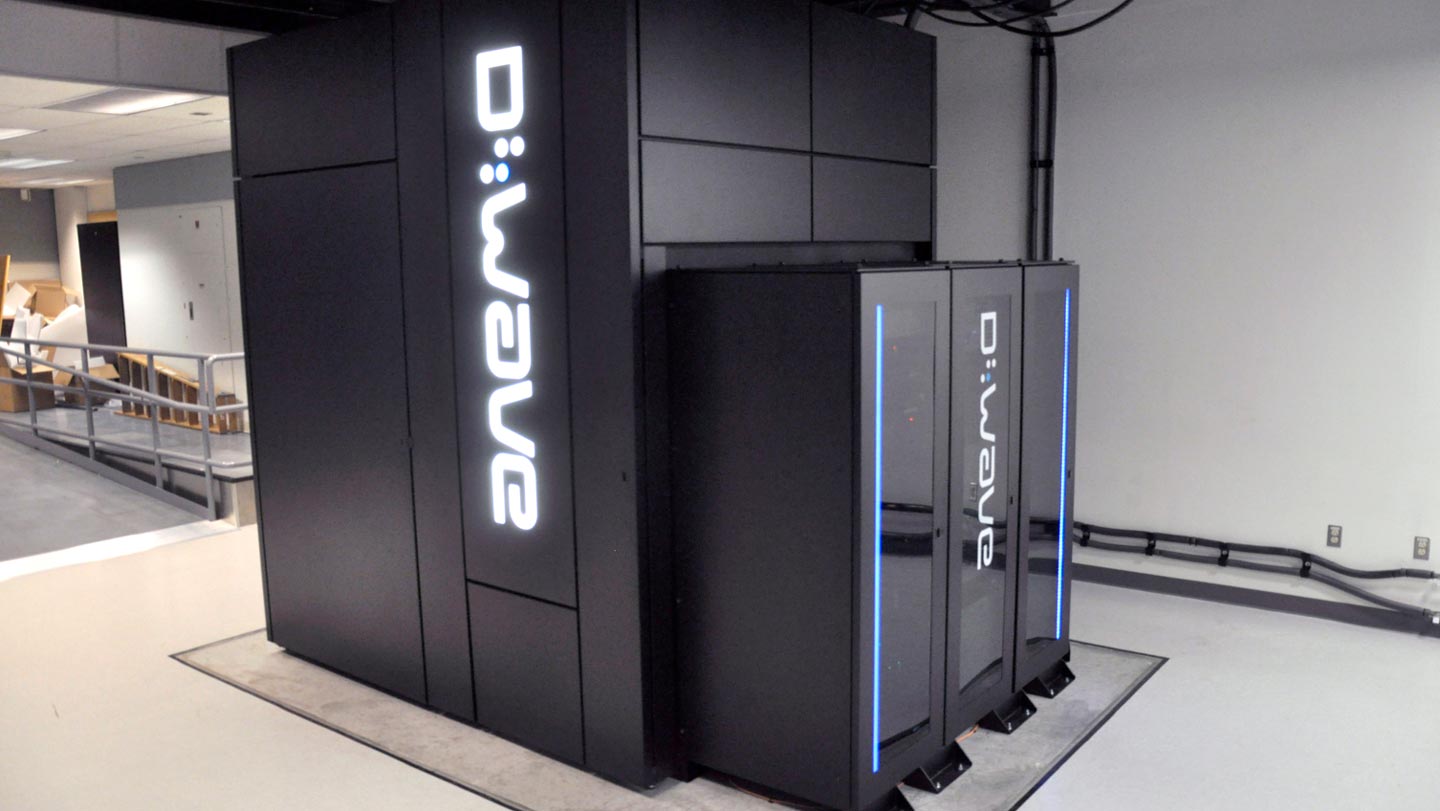
The 512-qubit D-Wave Two quantum computer located in the NASA Advanced Supercomputing (NAS) facility at NASA’s Ames Research Center. The system – about the size of a garden storage shed – is housed inside a cryogenics system within a 10-square-meter shielded room.
The University of Alabama in Huntsville (UAH), a part of The University of Alabama System, will host the inaugural Southeastern Quantum Collaborative (SQC) Colloquium on Monday, August 10, in Charger Theatre on the UAH Campus. The event will bring together leaders from academia, industry and government to explore the future of quantum science and technology. The gathering will highlight the growing role of quantum technologies in national security, aerospace, advanced manufacturing and workforce development while showcasing the Southeast’s emergence as a center for quantum innovation.
The event will highlight emerging research, workforce initiatives and new partnership opportunities across the Southeast and feature a keynote address by the director of the Defense Advanced Research Projects Agency’s (DARPA) Multi X Office, Dr. Whitney Mason. Panel discussions and networking opportunities will be aimed at strengthening collaboration among universities, industry and government. The colloquium is free to attend, but registration through the event website is required.
Led through the UAH College of Science, the SQC is a regional consortium dedicated to accelerating the adoption of quantum technologies while developing the workforce needed to support this rapidly expanding field. The collaborative has grown to nearly 30 partners since its launch in December 2025 and brings together universities, companies and government organizations to position the Southeast as a global hub for quantum innovation.
Founding and inaugural members include UAH, Alabama A&M University, IBM, Davidson Technologies, IonQ, D-Wave Quantum, Oak Ridge Associated Universities, the University of Tennessee at Chattanooga, Leidos, TVA and others, with additional government participation continuing to expand.
Scheduled to coincide with the week of the Space & Missile Defense (SMD) Symposium in Huntsville, Ala., the August colloquium will provide an opportunity for researchers, defense leaders, technology companies and educators to explore how quantum computing and related technologies can accelerate innovation in national security, aerospace, advanced manufacturing and other critical sectors. SMD is one of the nation's premier defense gatherings, underscoring the close alignment between quantum technologies and Huntsville's leadership in defense, missile systems and aerospace research.
The collaborative focuses on fostering partnerships that move quantum research from the laboratory into practical applications. Priority areas to be addressed at the colloquium include quantum computing, sensing, communications, networking and algorithms, with an emphasis on supporting national defense, economic development and workforce readiness.
Huntsville offers a unique environment for these efforts through its concentration of defense organizations, aerospace expertise, federal laboratories and technology companies. The region also benefits from nearby access to advanced quantum computing resources, including the D-Wave Advantage2 quantum system hosted by Davidson Technologies, creating new opportunities for collaborative research, student training and real-world experimentation.
“The SQC aims to leverage the region's unique concentration of cleared defense infrastructure, advanced missile defense expertise and strong base of prime contractors to accelerate the transition of quantum information science and technology into field-ready capabilities for the warfighter,” explains Dr. Rainer Steinwandt, dean of the UAH College of Science. “The Collaborative's goal is to transform the Southeastern United States into an applied quantum science leader.”
Organizations interested in joining the Southeastern Quantum Collaborative or learning more about the August colloquium are encouraged to visit SQC Membership.