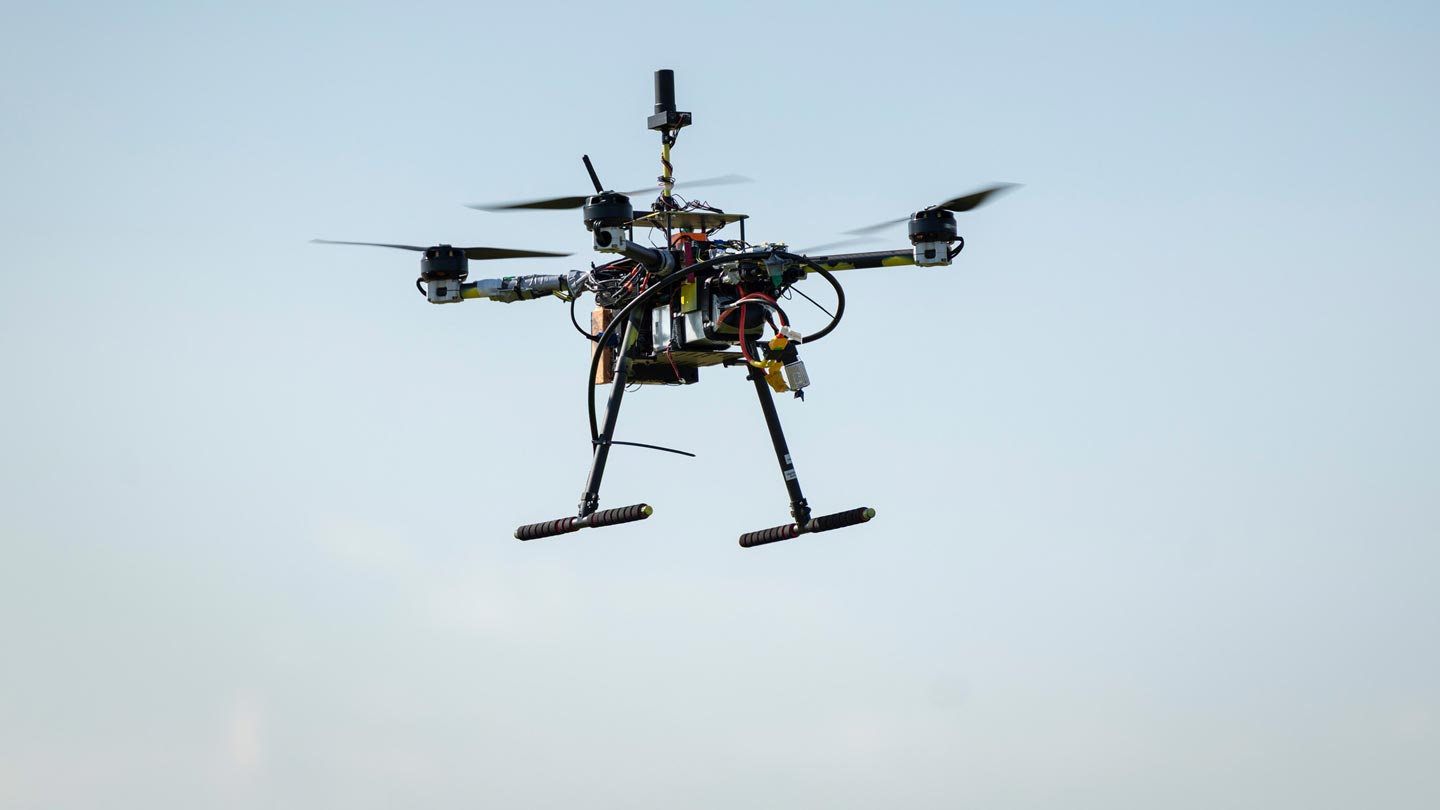
UAH puts autonomous drone technology to the test in final international NATO competition focused on disaster support
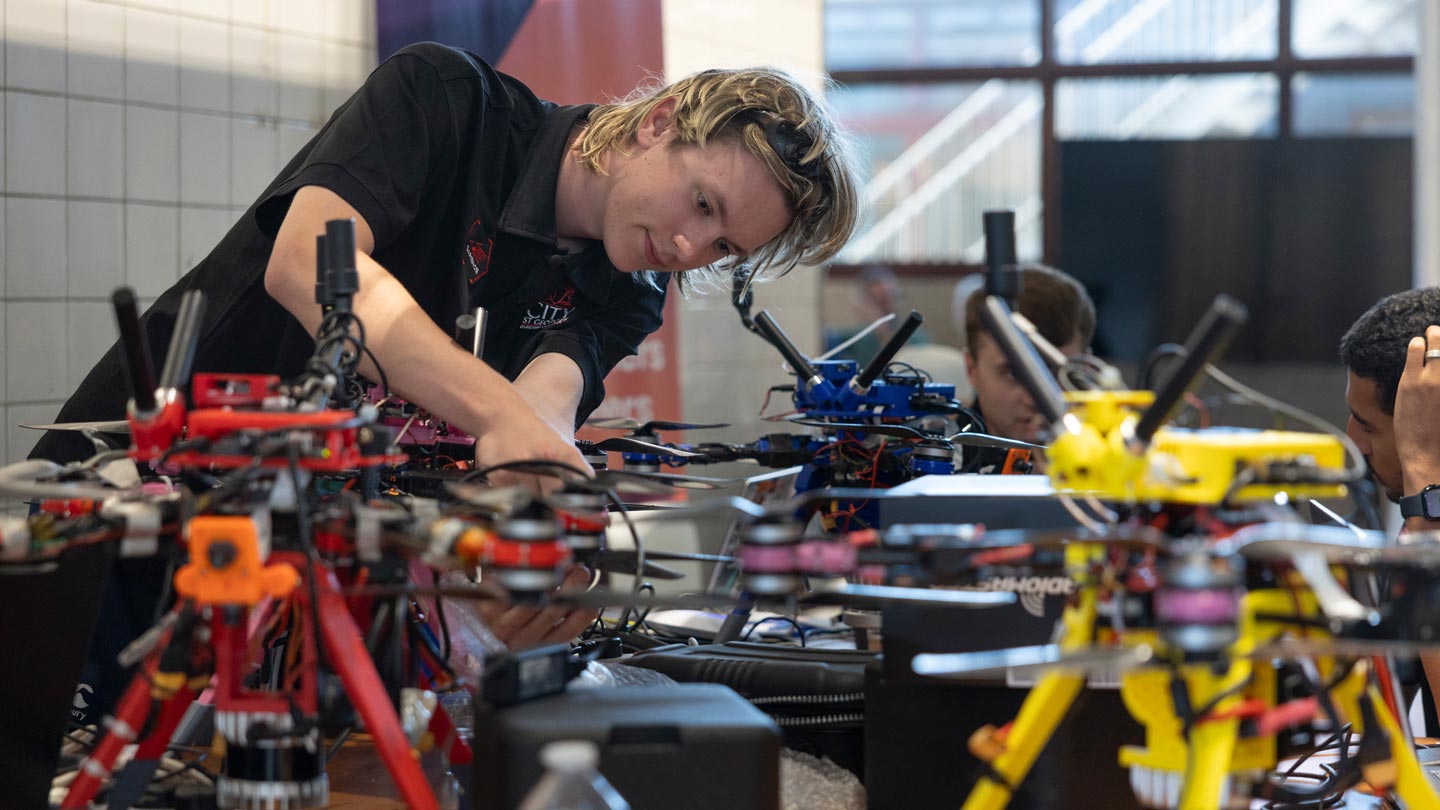
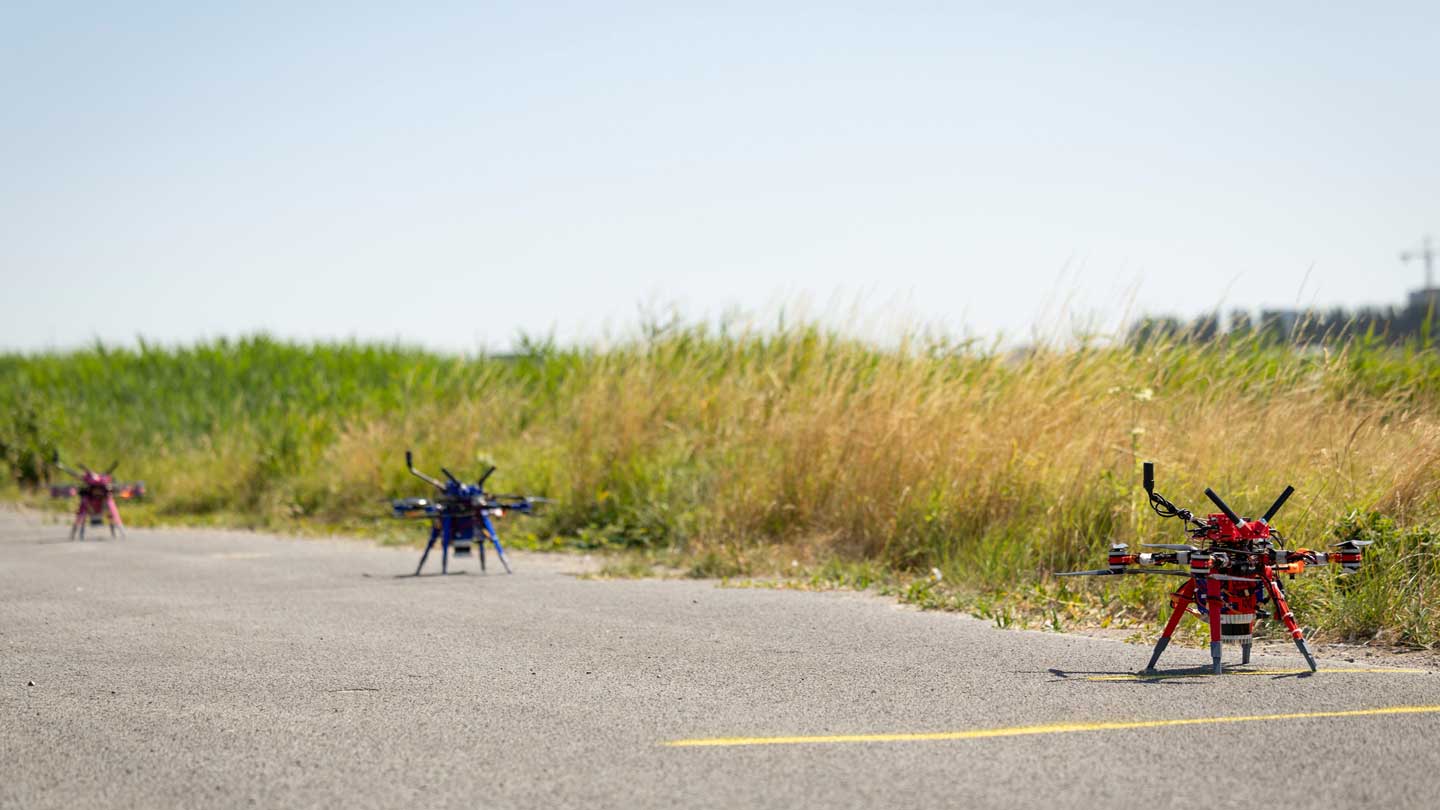
The University of Alabama in Huntsville competed in the third and final NATO SAPIENCE Drone Competition, where teams were challenged to use multiple autonomous drones to search a simulated disaster environment without GPS or human intervention.
When disaster strikes and GPS communications and human access are compromised, autonomous drones could one day help find survivors and deliver lifesaving supplies. Researchers and students at The University of Alabama in Huntsville (UAH), a part of The University of Alabama System, are helping make that future possible. UAH was one of four university teams competing this summer in the final SAPIENCE competition at Unmanned Valley in Katwijk, Netherlands. The NATO Science for Peace and Security-supported project challenged teams to use multiple autonomous drones to search a simulated disaster environment, identify survivors, determine the urgency of their needs and coordinate responses, all without GPS or human intervention.
The international competition brought together teams from UAH, City St George’s, University of London; University of Klagenfurt in Austria; and Delft University of Technology in the Netherlands, which hosted the event. For UAH, the competition marked the culmination of a three-year research effort. Dr. Bryan Mesmer, UAH professor and principal investigator, served as a SAPIENCE project co-director alongside researchers from the other participating universities. The final SAPIENCE competition was won by City St George’s.
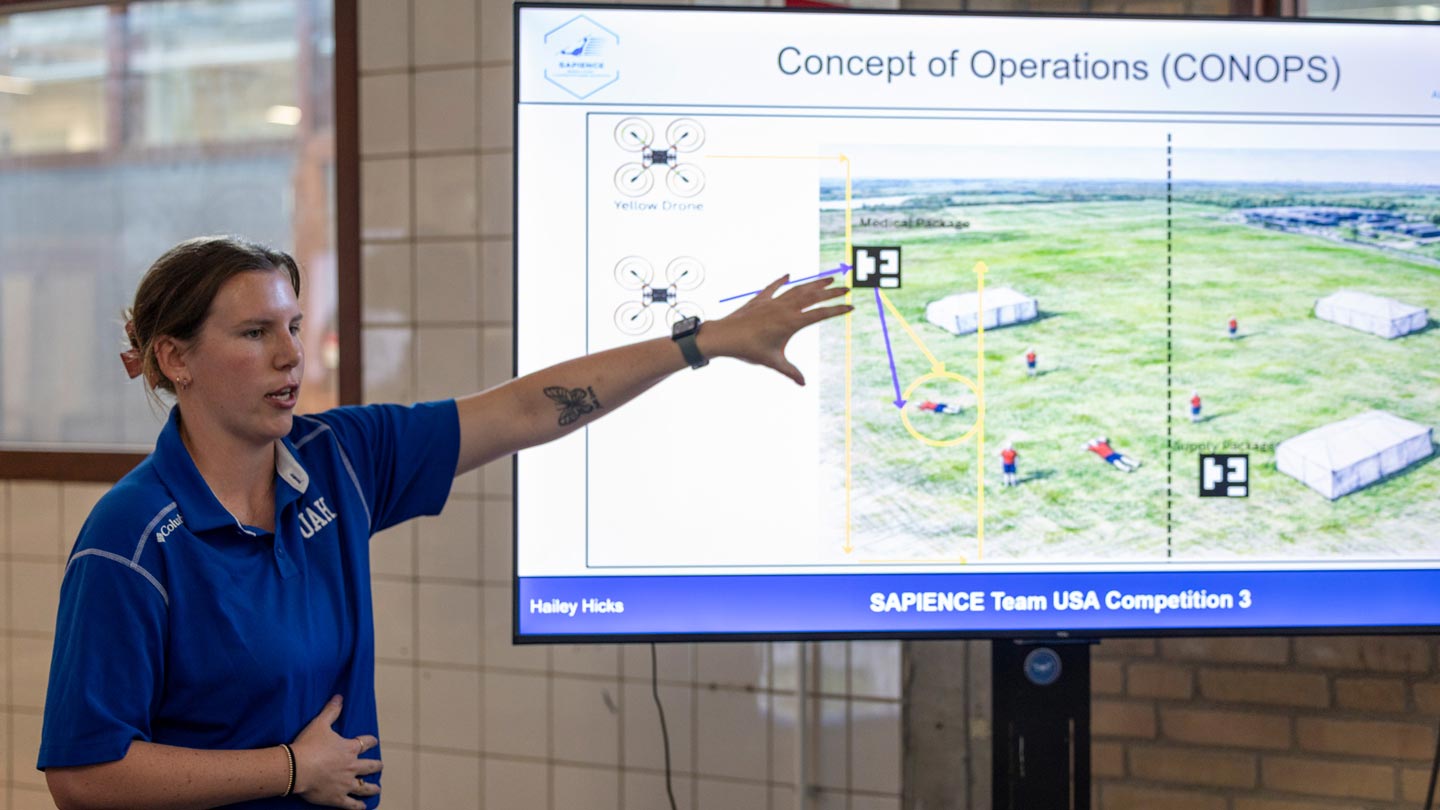
The 2026 challenge combined capabilities developed throughout the course of the NATO project. Drones were tasked with navigating both indoor and outdoor environments, detecting simulated survivors, distinguishing between different levels of urgency and coordinating the delivery of appropriate supplies. They also had to avoid obstacles and one another while operating without satellite-based positioning.
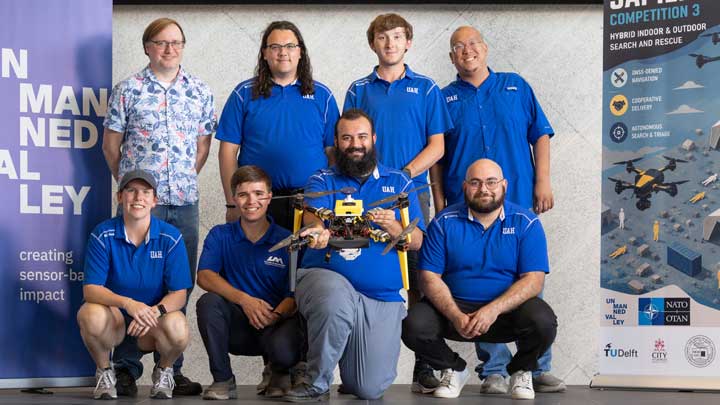
UAH NATO SAPIENCE team: Top, left to right, Bryan Mesmer, Jamie Roberson, Brandon Rostenbach, Howard Chen. Bottom, left to right, Hailey Hicks, David Sharpe, Jackson Neese, Joseph Schwalb.
“The ability for the drone to know where it is without GPS is a very hard problem in itself,” explains Dr. Howard Chen, assistant professor in UAH’s Department of Industrial & Systems Engineering and Engineering Management (ISEEM). “Our research lab, along with many commercial and government entities, have made strides towards solving it, but there is still a lot more work that needs to be done.”
The UAH team also faced an unexpected challenge during the competition when network connectivity became an issue and its navigation system behaved differently than during previous testing. “I think our ability to have calm heads when faced with adversity was the most beneficial part,” Chen says. “This was pointed out by the judges as well.”
A focus on affordable innovation
UAH’s involvement in SAPIENCE extends beyond the final competition. In July 2025, UAH hosted the second SAPIENCE competition at the Huntsville UAS and C-UAS Center of Excellence Test Range. That event challenged teams to use autonomous drones for outdoor disaster-response tasks including mapping, damage assessment, search and rescue and supply delivery.
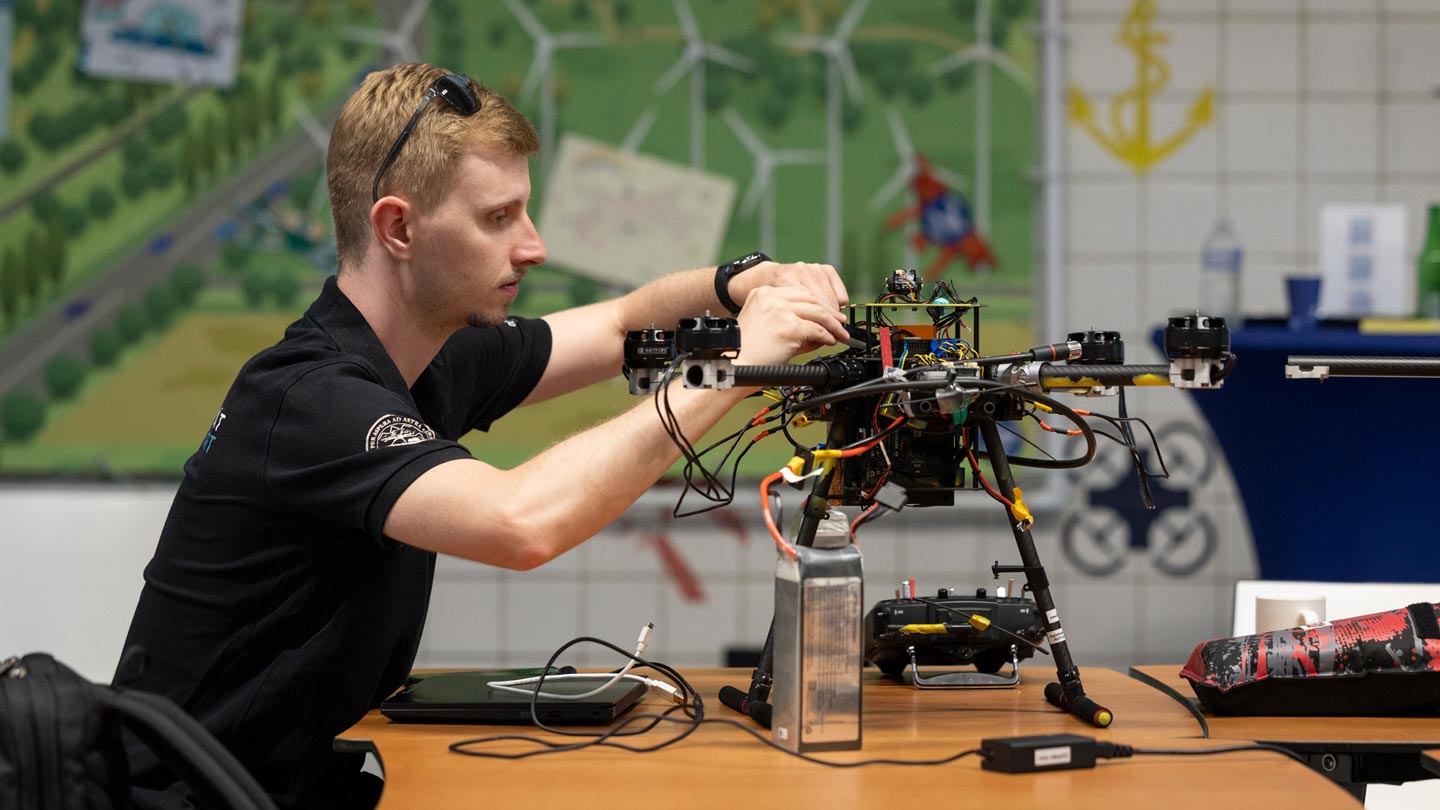
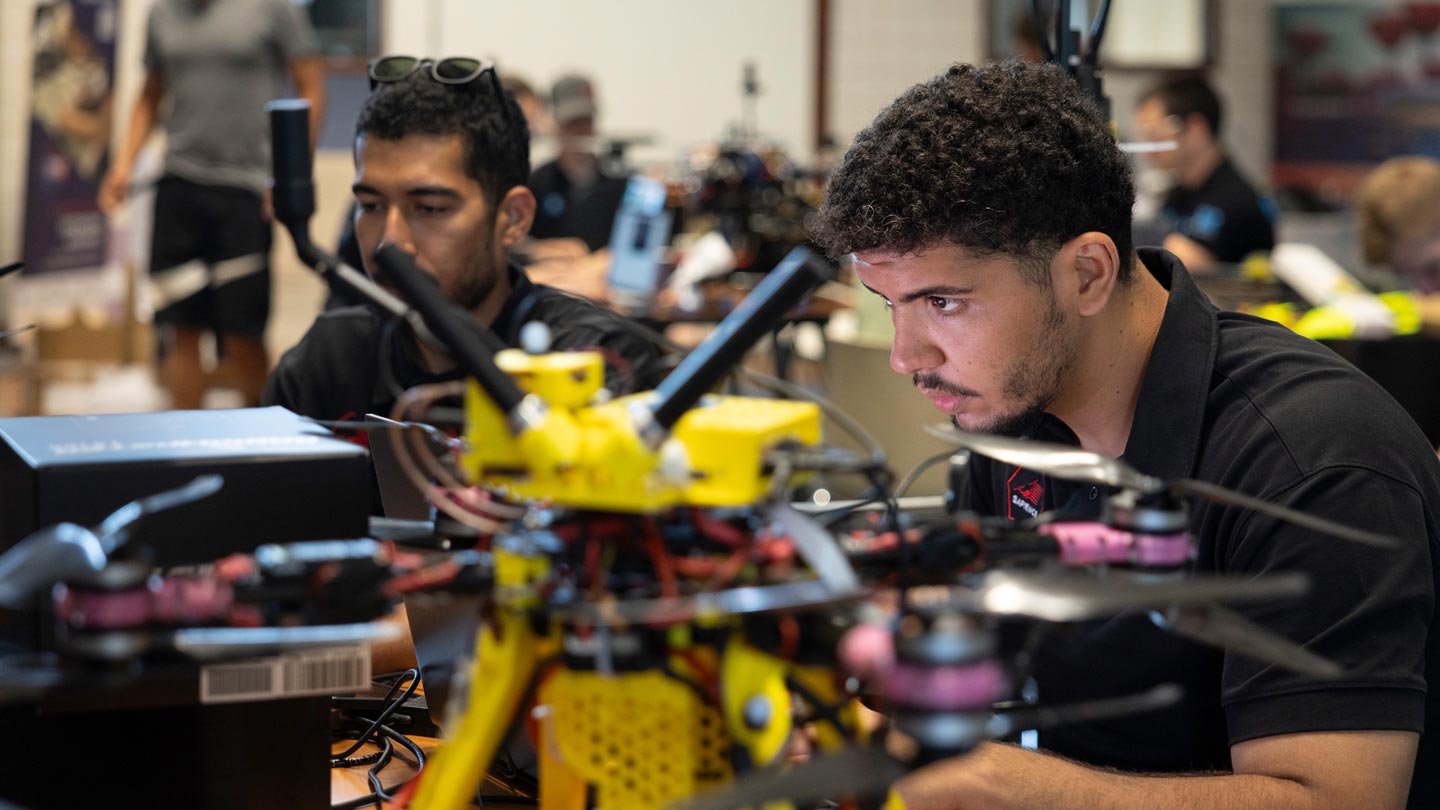
Chen says the experience gave students an unusually broad range of engineering and operational experience. “I think the students have accomplished a lot,” he notes. “They've learned all aspects of drones, from flying them, to buying frames, to speccing out motors and motor controllers, to integrating code onto flight controllers, to developing a custom autonomy stack, as well as how to write and debug navigation solutions.”
The students also gained experience in the planning and operational requirements of flight testing, including checklists, flight plans and risk assessments.
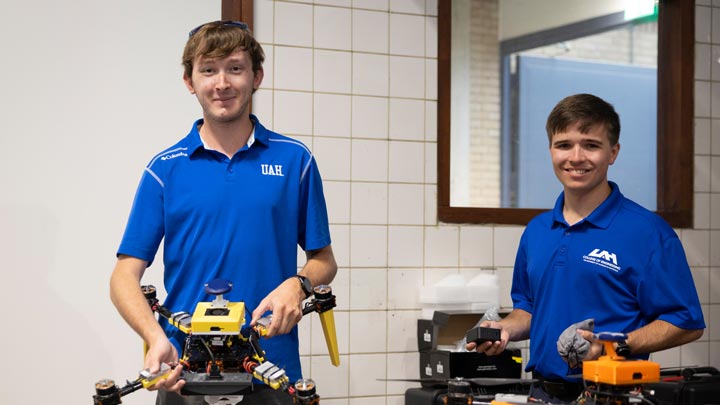
One unique element of UAH’s approach was its emphasis on developing an economical drone platform that could withstand the demands of repeated testing.
“I think what we brought that was distinctive was a drone that costs about 10% of what other teams have, despite all teams having the same budget,” Chen notes. “The relatively inexpensive drone design enables us to iterate faster since the inevitable crashes that come along with UAS testing come with less financial and time setbacks, which enables us to do more testing.”
The international collaboration also allowed each university team to contribute its particular expertise. “The Delft team, for example, has a deep background in controls, the Austrian team had a deep background in navigation, the English team had a deep grounding in AI/ML and we have a deep background in systems engineering and integration,” Chen says.
UAH’s SAPIENCE work has been supported by the Department of Industrial & Systems Engineering and Engineering Management and the Rotorcraft Systems Engineering and Simulation Center, which provided access to the Huntsville test range as well as research engineers who supported flight testing as range safety officers and safety pilots.